Sterilisation and Shelf-Life Control in Plant Beverage OEM: Why Puree Drinks Are Harder
Dendrobium puree, sea buckthorn puree, mulberry and black goji puree, rosa roxburghii juice, blended fruit and vegetable juices - the category has grown on three claims: natural, additive-free, and nutrient-dense. For a contract manufacturer, however, these products are far harder to produce than powders or tablets. They contain water, sugar and active enzymes, which makes them an ideal culture medium for microorganisms, and one misjudged sterilisation cycle can turn an entire batch into swollen, unsaleable pouches.
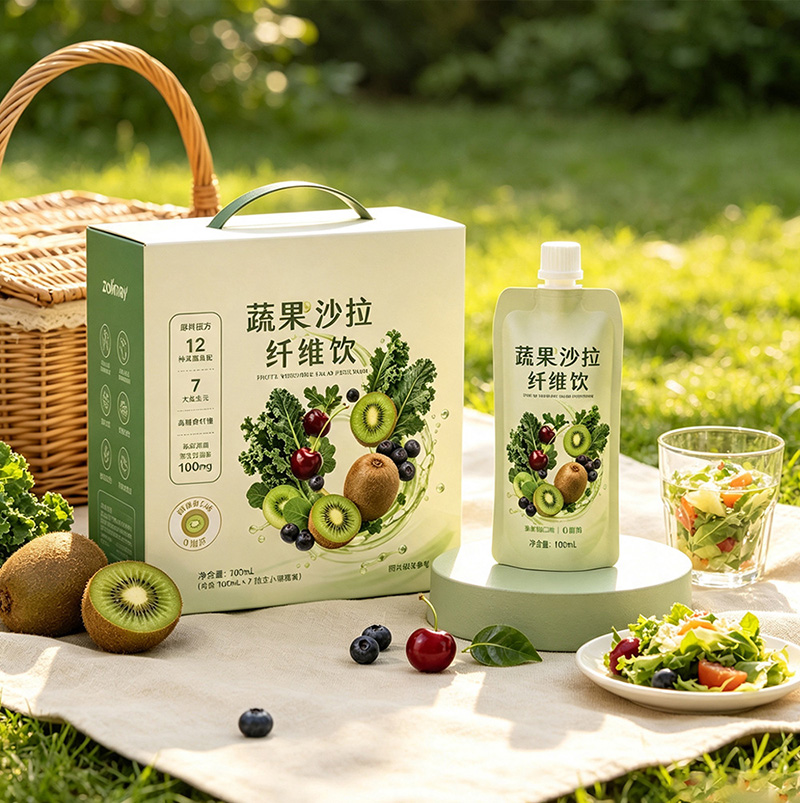
Why Puree Products Are Especially Difficult
Powders and tablets suppress microbial growth through low water activity, giving them inherent shelf stability. Plant purees are the opposite case. Water activity approaches 1.0, pH typically sits between 3.5 and 5.5 - most fruit and vegetable juices are acidic, though not all - and sugar content plus soluble solids supply ample nutrition for microbes. On top of that, many of the actives that carry the marketing story - anthocyanins, vitamin C, polyphenols, superoxide dismutase - are themselves heat-labile, so raising sterilisation intensity erodes the nutritional specification.
The central tension in plant beverage OEM is therefore this: sterilisation must be thorough enough to guarantee microbiological safety and shelf life, yet gentle enough to preserve colour, flavour and functional actives. Every process route is a search for the balance point between these two ends.
Three Mainstream Sterilisation Routes
Pasteurisation typically holds the product at 80 to 95 degrees Celsius for several seconds to several minutes. Equipment investment is low and both flavour and colour are well preserved, but the process is not commercially sterile, so the product requires a cold chain from 0 to 6 degrees Celsius throughout, with shelf life generally between 7 and 30 days. It suits short-shelf-life, premium fresh-pressed positioning.
Ultra-high temperature processing holds the product at 135 to 150 degrees Celsius for 2 to 8 seconds followed by aseptic filling. The result is ambient-stable for 6 to 12 months and is the most widely commercialised route. The drawback is Maillard browning and a mild cooked note plus measurable loss of heat-sensitive actives.
High pressure processing applies 400 to 600 megapascals to inactivate microorganisms with almost no temperature rise, giving the best retention of colour, flavour and functional compounds. It is the dominant technology for premium not-from-concentrate juices. Equipment cost is very high, packaging must be flexible rather than rigid, throughput is limited, and unit cost sits well above UHT.
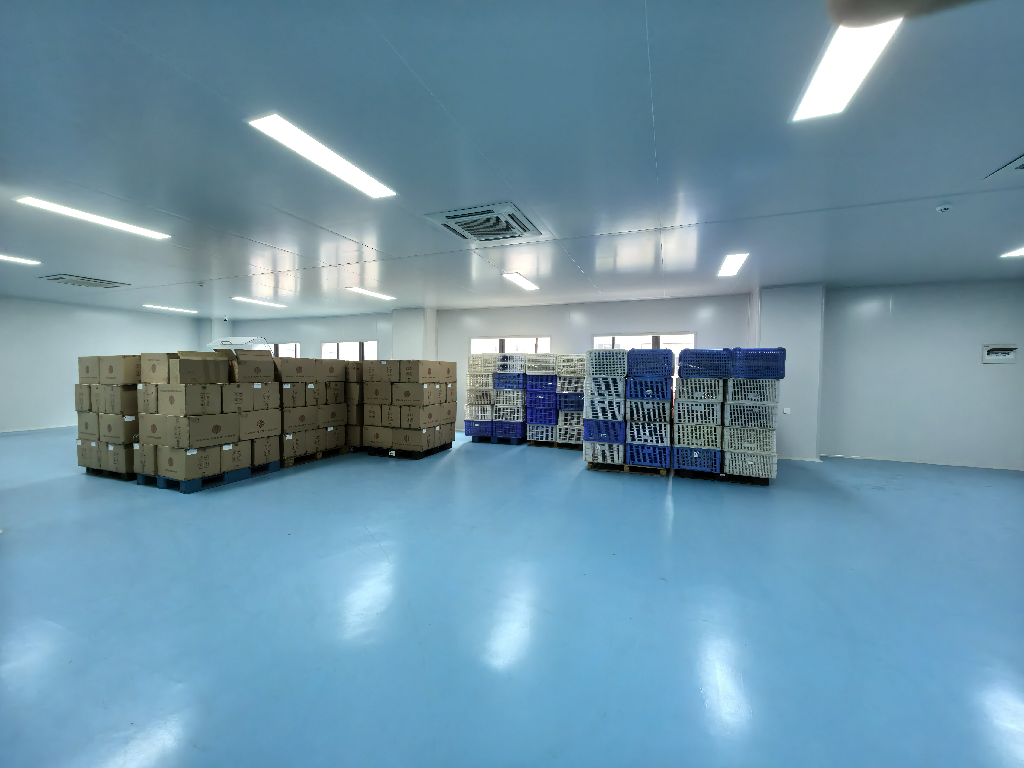
How to Choose: Work Backwards from Positioning
For premium fresh-pressed products sold through speciality retail or a local cold chain, choose pasteurisation with refrigerated distribution. For nationwide e-commerce fulfilment, export or long ambient shelf life, UHT with aseptic filling is the only economically viable option. Where budget allows and the concept rests on additive-free, high-activity claims, HPP delivers genuine differentiation, provided the cost and packaging constraints are accepted.
Production practice also offers a middle path: UHT followed by clean filling or hot filling at 88 to 95 degrees Celsius with bottle inversion achieves shelf life beyond six months without investing in a full aseptic line. This is the pragmatic choice behind many plant beverage OEM programmes.
The pH 4.6 Rule Sets the Process Bar
One rule is absolute. At pH 4.6 or below, Clostridium botulinum cannot produce toxin, so sterilisation only needs to target yeasts, moulds and lactic acid bacteria, and process intensity can be substantially reduced. Above pH 4.6, the product is classified as low-acid and must be processed accordingly, generally requiring temperatures above 121 degrees Celsius, with significant losses in flavour and colour. If a puree formulation adds dairy, cereal, nut or otherwise high-pH ingredients, recalculate the pH rather than assuming fruit juice process parameters still apply.
How Shelf-Life Validation Is Done
Shelf life is set from data, not assumption. The standard approach runs two tracks in parallel. Real-time stability testing stores the product under labelled storage conditions to the end of the claimed shelf life, testing microbiology, physicochemical parameters and sensory attributes at set intervals. Accelerated stability testing stores the product at 37 or 40 degrees Celsius with 75% relative humidity for one to three months and extrapolates to ambient conditions using established experience. Accelerated work supports fast decisions, real-time work provides final confirmation, and neither substitutes for the other.
Three Failure Points That Are Commonly Missed
The first is package integrity. Many swollen-pack incidents come not from inadequate sterilisation but from a poor seal. Sealing temperature, pressure and dwell time must be monitored as process parameters, with sampled packs undergoing integrity testing.
The second is incoming microbial load. If raw material arrives with a high background count, even aggressive sterilisation will leave heat-resistant spores behind. Microbiological limits belong in the raw material acceptance specification.
The third is the filling environment. Cleanroom classification on the aseptic line, operator discipline and CIP frequency all matter, because failure at any one of them nullifies all the effort spent on upstream sterilisation. When auditing a factory, this area tells you more than the brand name on the equipment.
Related Products
Milk Thistle, Kudzu & Turmeric Beverage with Sea Buckthorn Puree & Honey | Herbal Oral Liquid OEM | Liquid Fruit & Vegetable Salad Fiber Drink | Dietary Fiber Meal Replacement Vegetable Juice Beverage OEM
About Guangzhou Mesen Health Biotechnology Co., Ltd
Guangzhou Mesen Health Biotechnology Co., Ltd is located in the Huashan Science and Technology Park, Huadu District, Guangzhou. The company has focused on OEM and ODM services for the big health industry for nearly 20 years, operating dedicated research, production, sales and management centres, and maintaining long-term strategic partnerships with well-known Chinese medicine colleges and research institutions. Capabilities span pressed candy, gummies, capsules, solid beverages, herbal teas, plant beverages, protein powders, dietary supplements and enzyme jelly - from formulation development through contract manufacturing. For details on minimum order quantities, sampling lead times and quotations, see our manufacturing advantages and product range, or contact us for a tailored proposal.
Further Reading