Pressed Candy OEM Manufacturing: 7 Critical Control Points from Formulation to Finished Goods
Pressed candy tablets are among the highest-volume and lowest-barrier dosage forms in the nutrition and dietary supplement industry. Many brand owners assume tablet contract manufacturing simply means pouring powder into a die and pressing it - until the sampling stage reveals friable tablets, capping, sticking, or content uniformity failures that push the launch schedule back by months. This article breaks down the seven critical control points of pressed candy OEM manufacturing in the actual order they occur on the production floor.
1. Requirement Alignment and Formulation Design
Everything downstream depends on this step. The brand owner needs to define the product positioning - satiety support, blood sugar management, sports nutrition, or daily supplementation - along with the target demographic, daily serving size, tablet specification (typically 0.5 g to 1.2 g per tablet), taste and colour preferences, and the budget envelope. The contract manufacturer's formulation team then builds the ingredient matrix accordingly. A satiety-focused formula, for example, is usually built on a backbone of white kidney bean extract, resistant dextrin and konjac flour, while a sports nutrition formula centres on branched-chain amino acids, creatine and electrolytes.
One distinction deserves emphasis: the amount printed on the supplement facts panel is not the same as the amount charged into the batch. Heat-sensitive actives are lost during high-temperature granulation and through the friction of compression. An experienced manufacturer builds a process loss coefficient into the formulation stage rather than charging the label value directly.
2. Raw Material Sourcing and Incoming Inspection
At a qualified facility, every raw material must arrive with full documentation: business licence, production permit, certificate of analysis from the supplier, and third-party test reports covering heavy metals, pesticide residues and microbiological counts. On arrival, materials are sampled by lot and re-tested; any lot that fails is rejected in full. The most common source of failure in tablet OEM projects is the raw material tier - two suppliers of white kidney bean extract can differ by a factor of two in alpha-amylase inhibiting activity, and the finished product performs accordingly.
3. Granulation: Wet, Dry or Direct Compression
Granulation gives the powder blend adequate flow and compressibility. Three routes exist, each with its own territory.
Wet granulation introduces a wetting agent or binder to form a wet mass, which is then screened and dried. It delivers strong granules with good appearance, but the process is long and heat-sensitive actives degrade. It suits most botanical extract formulas.
Dry granulation, or roller compaction, presses the powder into ribbons that are then milled and screened. It introduces no moisture and no heat, which makes it the right choice for water-sensitive or thermolabile materials such as certain probiotic and enzyme ingredients.
Direct compression skips granulation entirely and compresses the blended powder as-is. It is the cheapest and fastest route, but it places demanding requirements on powder flow properties and frequently produces content uniformity problems when the actives are fine, low-density powders.
4. Final Blending and Lubrication
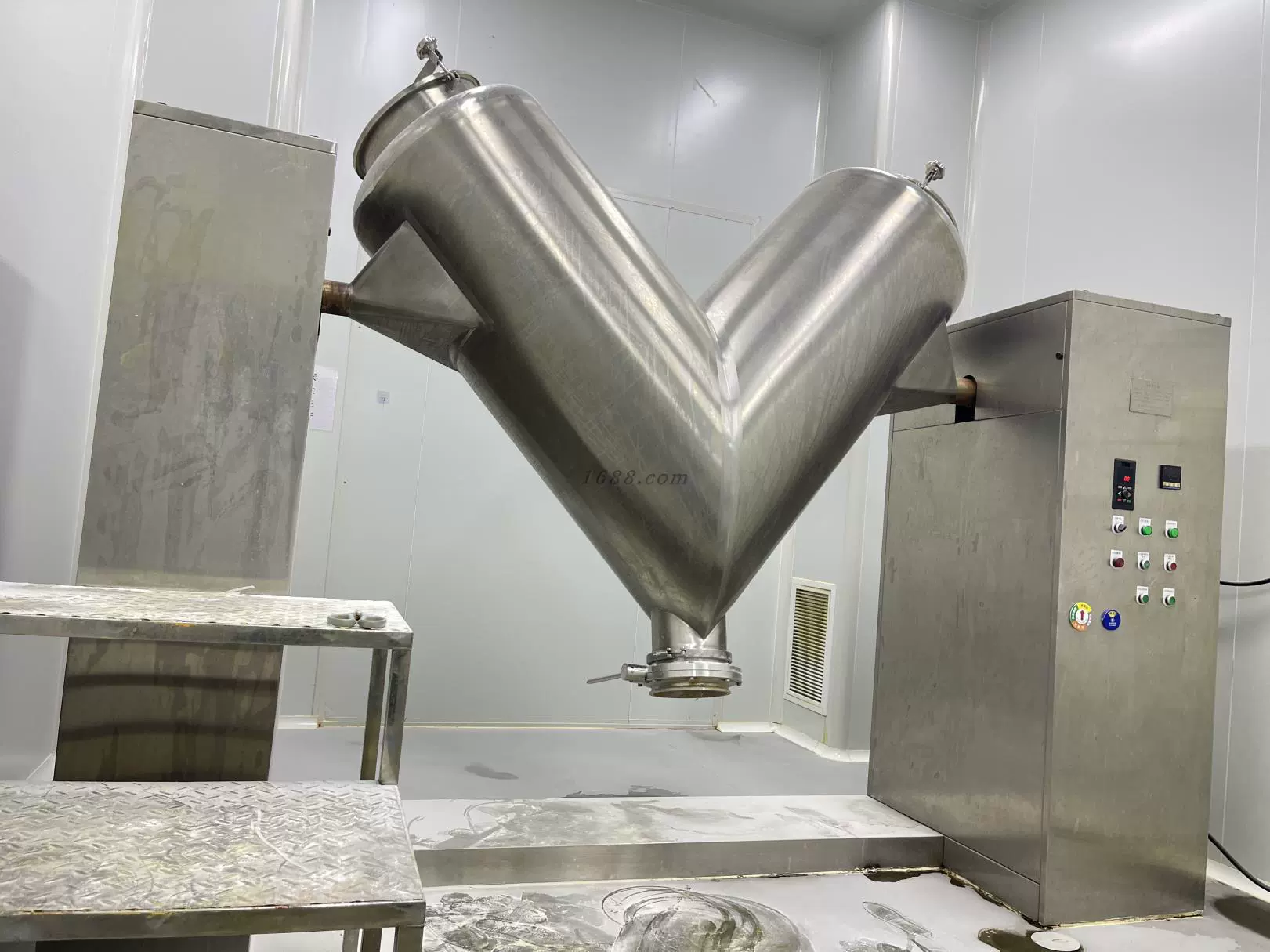
After granulation, the extra-granular excipients - disintegrants, lubricants, flavours - are added in the final blend. Blending time is a double-edged sword: under-blending fails content uniformity, while over-blending can actually induce segregation as particles stratify by density and size. Magnesium stearate is typically used at 0.3% to 1%; exceeding that range prolongs disintegration and slows the release of the active fraction.
5. Compression
The tablet press compresses the material between an upper and lower punch. Three parameters govern the outcome: fill depth, which determines tablet weight; pre-compression and main compression force, which determine hardness; and turret speed, which determines throughput and weight stability. Sticking, capping, soft tablets and out-of-spec weight variation almost always trace back to a mismatch between these three parameters and the physical character of the material. On the equipment side, high-speed rotary presses fitted with force feeders handle poorly flowing fine powders far better than basic gravity-feed machines.
6. Film Coating
Film coating solves three problems: masking the bitter or astringent notes of botanical actives, improving swallowability, and adding a barrier against moisture and oxidation. Some brands also choose shaped tablets, two-tone tablets or debossed logos for visual differentiation. Coating adds a process step and a cost line, so whether it is warranted depends on the palatability of the base formula.
7. Primary and Secondary Packaging
Tablet products are packed in bottles (PE or PET with a desiccant), aluminium-plastic blister packs, or sachets. Blister packs offer the best seal integrity and single-dose convenience; bottles offer the lowest unit cost. The packaging stage must include seal integrity testing and shelf-life stability studies, particularly for formulations containing probiotics or highly hygroscopic ingredients.
Three Recommendations for Brand Owners
First, do not compare quotations alone at the sampling stage. Compare hardness, friability, disintegration time and appearance consistency for the same formulation across different factories. Second, agree acceptance criteria in writing - sensory, physicochemical and microbiological limits - and write them into the contract. Third, prioritise a manufacturer with in-house R&D that can iterate the formula with you; when the product needs a formulation upgrade after launch, this alone saves months of back-and-forth.
Related Products
Glycerol diester coffee OEM OEM OEM OEM OEM meal replacement coffee MCT live broadcast same solid beverage source manufacturer | GLP-1 Semaglutide Satiety & Fat Blocker Tablets | Custom Pressed Candy OEM Manufacturing
About Guangzhou Mesen Health Biotechnology Co., Ltd
Guangzhou Mesen Health Biotechnology Co., Ltd is located in the Huashan Science and Technology Park, Huadu District, Guangzhou. The company has focused on OEM and ODM services for the big health industry for nearly 20 years, operating dedicated research, production, sales and management centres, and maintaining long-term strategic partnerships with well-known Chinese medicine colleges and research institutions. Capabilities span pressed candy, gummies, capsules, solid beverages, herbal teas, plant beverages, protein powders, dietary supplements and enzyme jelly - from formulation development through contract manufacturing. For details on minimum order quantities, sampling lead times and quotations, see our manufacturing advantages and product range, or contact us for a tailored proposal.
Further Reading