Granulation and Instant Solubility Control in Solid Beverage OEM: Why Your Powder Cakes
Solid beverage powders are the lowest-barrier and broadest category in the nutrition space: meal replacement shakes, probiotic powders, green juice powders, protein powders and collagen drink mixes all sit under this heading. Precisely because it looks simple, problems in solid beverage OEM are frequently misdiagnosed as formulation failures when the real cause lies in granulation and moisture control.
Three Granulation Routes
Wet granulation mixes the powder blend with a wetting agent - water or a hydroalcoholic solution - to form a wet mass, which is screened, dried and sized. The resulting granules are dense, uniform in appearance and free-flowing, with little dusting at the point of reconstitution. The trade-offs are a long process and thermal drying, which degrades heat-sensitive actives such as probiotics, enzymes and certain vitamins.
Dry granulation, or roller compaction, compresses the blend into ribbons that are milled and screened. It adds neither water nor heat, which suits heat- and moisture-sensitive formulations. Granule density is high and dissolution is somewhat slower than with wet granules.
Spray granulation, often called one-step fluidised bed granulation, suspends the powder in an air stream and sprays binder onto it while mixing, granulating and drying take place simultaneously. The granules are porous and loose-structured, giving the best instant solubility in the industry. Equipment investment and energy consumption are correspondingly the highest.
What Actually Determines Instant Solubility
Instant solubility is not a single specification but the combined result of several physical properties. Four matter most: granule porosity, since a porous structure absorbs water quickly; granule density, which must be balanced because very low density causes floating; wettability, meaning whether surface hydrophilic groups allow water to penetrate rapidly; and the intrinsic solubility of the actives themselves.
The complaint brands report most often - powder that will not disperse and forms lumps - is caused by the outer layer hydrating into a high-viscosity gel that traps dry powder inside. It is especially common in formulas loaded with dietary fibre, konjac gum, collagen peptides and maltodextrin. The fix is not to stir harder; it is to change the granule pore structure or introduce a wetting aid such as soy or egg lecithin as a surface modifier.
Three Real Causes of Caking
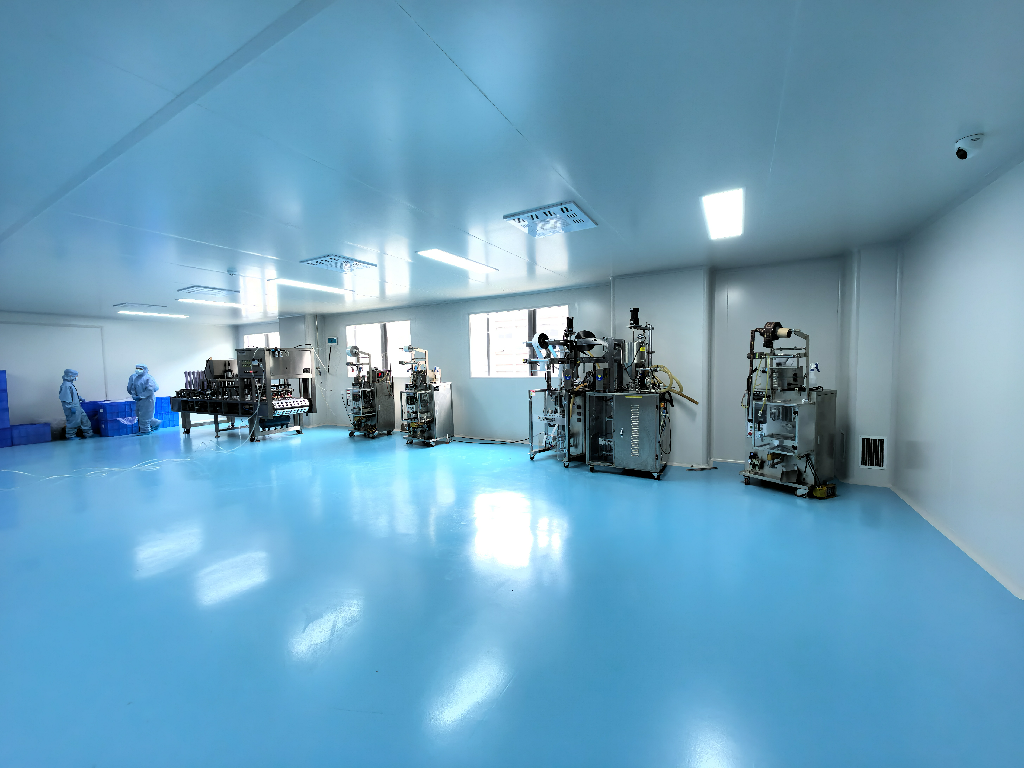
The first is excessive moisture. Solid beverage powders are typically held at 3% to 5% moisture. Above that range, a saturated solution film forms on particle surfaces, liquid bridges bind particles together, and the product hardens into a block within weeks of storage.
The second is insufficient packaging barrier. Foil laminate pouches outperform metallised film or plain PE by a wide margin. Hygroscopic formulas containing probiotics, enzymes or oligosaccharides require foil laminate with a desiccant, along with seal integrity testing.
The third is storage conditions. Recommended conditions are 25 degrees Celsius or below and 60% relative humidity or below. The plum rain season in southern China and open-air staging areas in e-commerce warehouses are the two most frequent sources of caking complaints. All three conditions belong in the quality agreement when a solid beverage project is signed off.
Segregation and Content Uniformity
The wider the spread in particle size and bulk density across formula components, the more readily the blend segregates during packaging vibration and transit: heavy coarse particles sink while light fines rise, so each scoop delivers a different ratio of actives. Standard practice is to narrow the particle size distribution band across all inputs and to use geometric dilution - premixing the micro-quantity actives with a small portion of carrier first, then scaling the mix up stepwise.
Choosing a Packaging Format
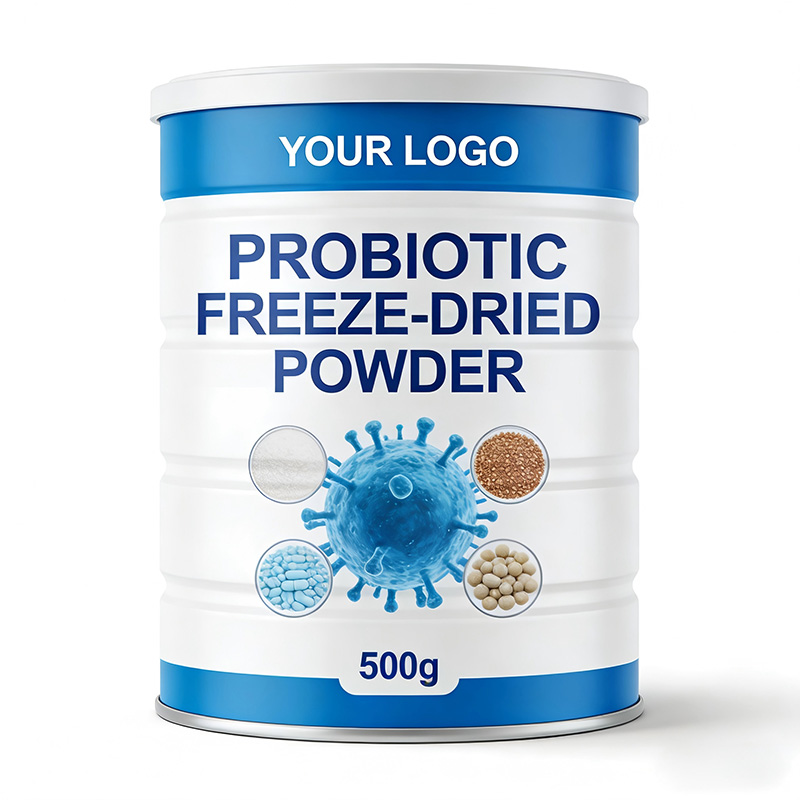
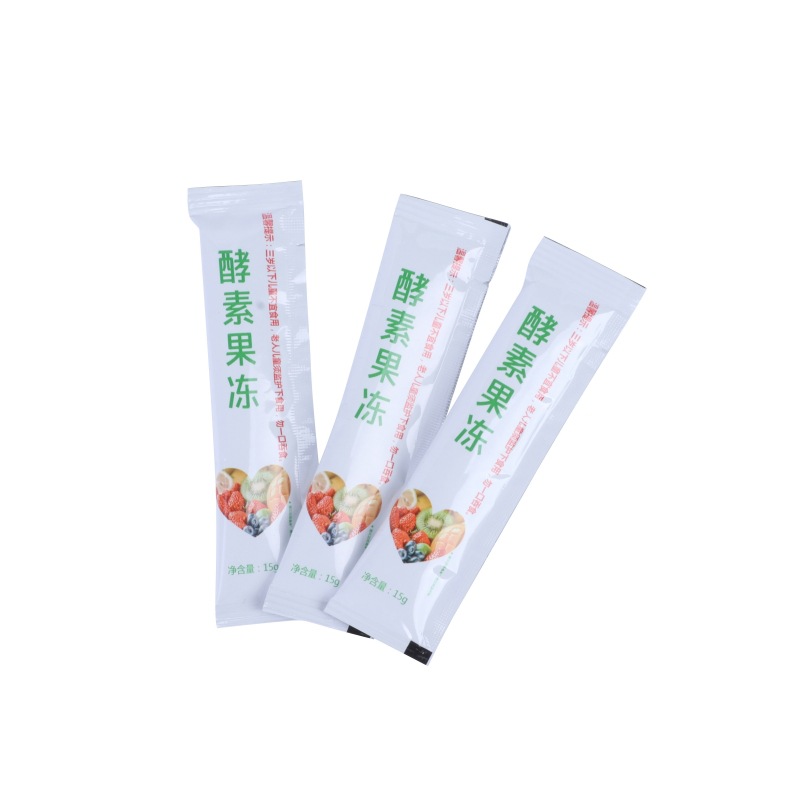
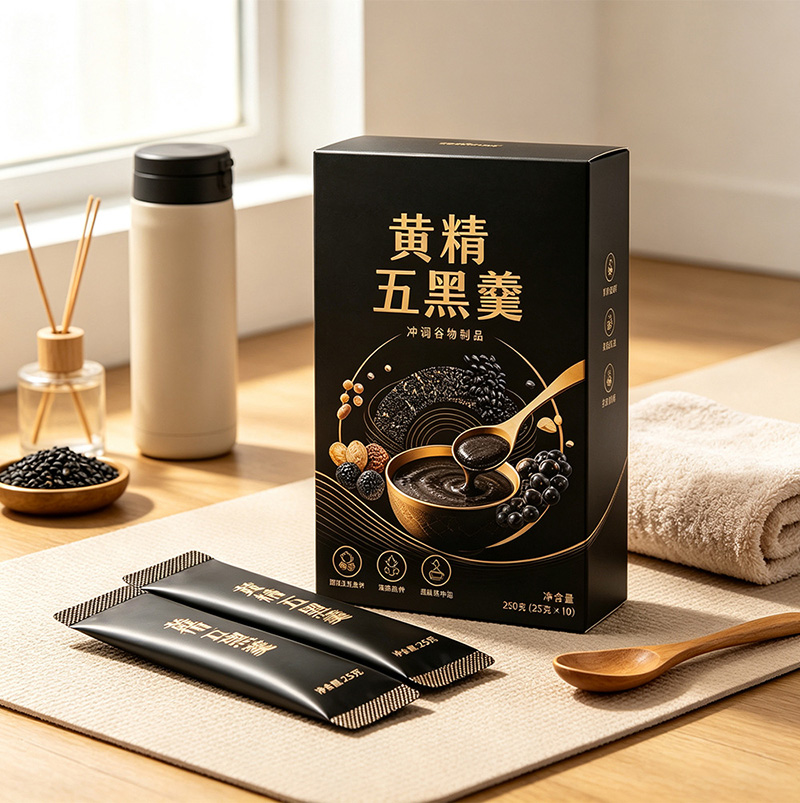
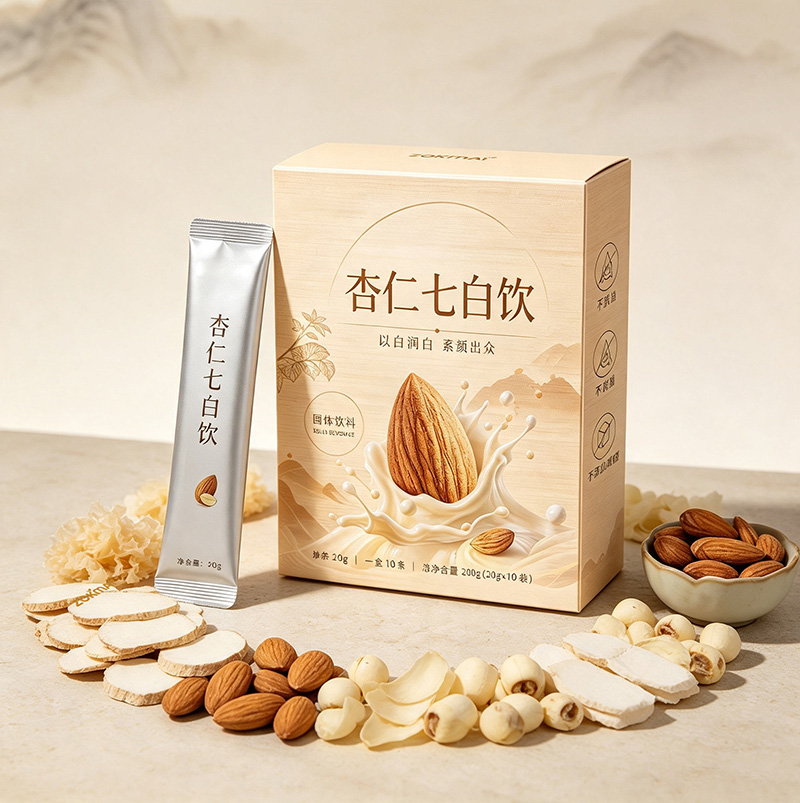
Stick packs open one-handed, dose accurately and travel well, making them the mainstream choice for meal replacement and nutrition powders, though they demand higher filling accuracy and material cost. Canisters suit large formats such as 500 g to 1 kg protein powders, come with a scoop and carry the lowest unit cost. Flat sachets are cheapest but offer a poorer opening experience and looser dosing accuracy. Export programmes must also confirm food contact material compliance, including EU Regulation 10/2011 and US FDA 21 CFR.
An Acceptance Checklist for Brand Owners
At the sampling stage, fix five tests: moisture content, water activity, solubility and sedimentation behaviour after reconstitution, microbiological counts for aerobic plate count, coliforms and yeast and mould, and accelerated stability at 37 degrees Celsius and 75% relative humidity for three months with appearance and assay checked afterwards. Passing all five sharply reduces the probability of problems at production scale.
Cost and Minimum Order Quantity
Minimum order quantities for solid beverages typically start in the low thousands of sachets, far below softgels or gummies, which makes the format the most forgiving for testing a new product. Raw materials dominate the cost structure, particularly functional actives, while packaging and conversion costs stay comparatively stable. For long-term programmes, lock the granulation route and packaging specification at the outset, since changing either later forces stability testing to be repeated from the beginning.
Related Products
White Kidney Bean Black Coffee Latte Powder | Instant Keto Enzyme Coffee Solid Beverage OEM Private Label | Protein Berry Meal Replacement Shake Powder | Satiety Smoothie Solid Beverage Custom OEM
About Guangzhou Mesen Health Biotechnology Co., Ltd
Guangzhou Mesen Health Biotechnology Co., Ltd is located in the Huashan Science and Technology Park, Huadu District, Guangzhou. The company has focused on OEM and ODM services for the big health industry for nearly 20 years, operating dedicated research, production, sales and management centres, and maintaining long-term strategic partnerships with well-known Chinese medicine colleges and research institutions. Capabilities span pressed candy, gummies, capsules, solid beverages, herbal teas, plant beverages, protein powders, dietary supplements and enzyme jelly - from formulation development through contract manufacturing. For details on minimum order quantities, sampling lead times and quotations, see our manufacturing advantages and product range, or contact us for a tailored proposal.
Further Reading