
Light Protection for Oral Liquid OEM: Bottles, Cartons and Shelf Life
In dietary supplement oral liquid contract manufacturing, formulation effort usually goes into stability, taste and preservation, with light barrier left until last. That order is fine for many products, but where a formula contains light-sensitive actives it becomes the decisive variable for potency at end of shelf life. Typical photosensitive ingredients include riboflavin and pyridoxine in the B group, vitamin C, vitamins A and D, polyphenol extracts, lutein and some natural colours. These decline continuously during shelf life, at a rate tied to cumulative light exposure, which in turn depends on bottle transmittance, the coverage provided by secondary packaging, and the lighting conditions in warehouses and on shelf.
1. How photodegradation actually happens
Photodegradation begins when a molecule absorbs a photon and enters an excited state, after which oxidation, hydrolysis, polymerisation or isomerisation follows. Whether it occurs and how fast depends mainly on three factors. The first is wavelength: ultraviolet is the most damaging, while the blue-violet region of visible light also affects many colours and vitamins, so a bottle that looks dark is not automatically protective. Transmittance in the sensitive wavelengths is what counts. The second is the transparency of the system itself, since a deeply coloured or turbid liquid provides natural screening whereas a pale, clear oral liquid lets light reach the base of the bottle. The third is the presence of oxygen and catalytic metals, because photo-oxidation generally needs oxygen and traces of iron or copper accelerate it markedly, which is why light protection and antioxidant strategy are usually implemented together, with limited effect from either alone.
2. Comparing bottle materials by transmittance
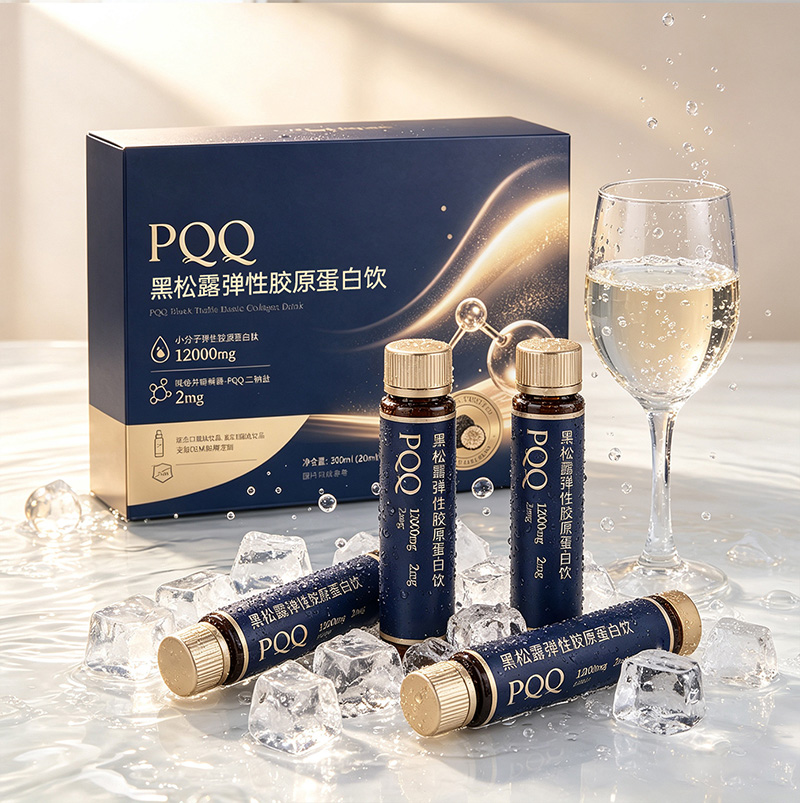
Three families dominate. Amber glass offers the best barrier, blocking almost entirely in the ultraviolet region, and is the most chemically inert, but it is heavy, prone to breakage in transit and relatively costly, and glass colouring processes differ between suppliers so transmittance varies. Amber or light-blocked high-density polyethylene and PET bottles are light and shatter-resistant at friendly cost, but performance depends on colorant loading and wall thickness, with wide differences between specifications of the same material, so a measured transmittance curve is required rather than a judgement from colour. Clear glass with a label or shrink sleeve is a compromise, though the neck and shoulder remain exposed and light enters through those uncovered areas, so coverage completeness needs assessing. Some products use an aluminium foil laminate pouch inside a carton for the best barrier, which changes the usage experience and suits single-stick formats.
3. How much secondary packaging can add
A carton or shrink sleeve limits exposure only during retail display. If the product is sold as a box and returned to the box immediately after use, carton coverage is substantial. If it is routinely left out on a counter in a bathroom or kitchen, protection is minimal. Display conditions matter too: under transparent shelving and track lighting, a single unit may receive more than ten hours of light a day, and the cumulative dose is not negligible. At the packaging design stage, it is worth mapping the exposure path from factory to consumer and assessing coverage segment by segment, paying particular attention to neck, shoulder and base, and to whether a window in the carton creates a locally intense hotspot.
4. Designing photostability testing that actually works
Placing samples by a window or under a lamp reveals gross problems only and cannot quantify anything. Proper photostability studies use a controlled light source with defined illuminance and spectral distribution, sampling at planned cumulative exposure levels, usually expressed in lux hours, to assay the key actives. Four design points matter. Include a dark control, otherwise decline cannot be attributed to light rather than temperature. Set exposure to cover the worst case the product may meet in distribution rather than the average. Assay the sensitive actives specifically instead of relying on indicators that barely move, such as total acidity or pH. And observe appearance alongside, since colour change generally appears earlier than potency loss and serves as an early warning. Only by combining photostability data with long-term ambient data can packaging grade and shelf life be set defensibly.
5. Balancing protection against cost
Raising the light barrier always costs more, and three directions help find the balance. Reduce reliance on the barrier by microencapsulating actives, choosing more stable material forms such as sodium ascorbate in place of ascorbic acid or microencapsulated vitamin D powder, or adjusting the redox environment of the system. Design protection in layers, reinforcing only where it is genuinely needed, for example a light-blocking label on the body and a shrink band on the neck, rather than upgrading the whole material. And set the standard by sales channel, since products shipped direct or sold from warehouse formats see short exposure, while products displayed under lighting for long periods need a higher grade. What matters is that grading is supported by data rather than by impression.
6. What to confirm with the manufacturer
Four things are worth confirming. The list of photosensitive ingredients in the formula and any photostability data available, including supplier documentation. Measured transmittance data for candidate bottles and packaging, particularly in ultraviolet and blue-violet bands. The proposed photostability protocol, expected cumulative exposure and which party carries the testing cost. And whether the relationship between packaging grade and shelf life is supported in the stability report. With all four in hand, the shelf-life claim rests on evidence rather than being revised after a shipment is already out. For a dosage form whose potency is this susceptible, treating packaging as part of the formula is usually cheaper than correcting later.
Related Products
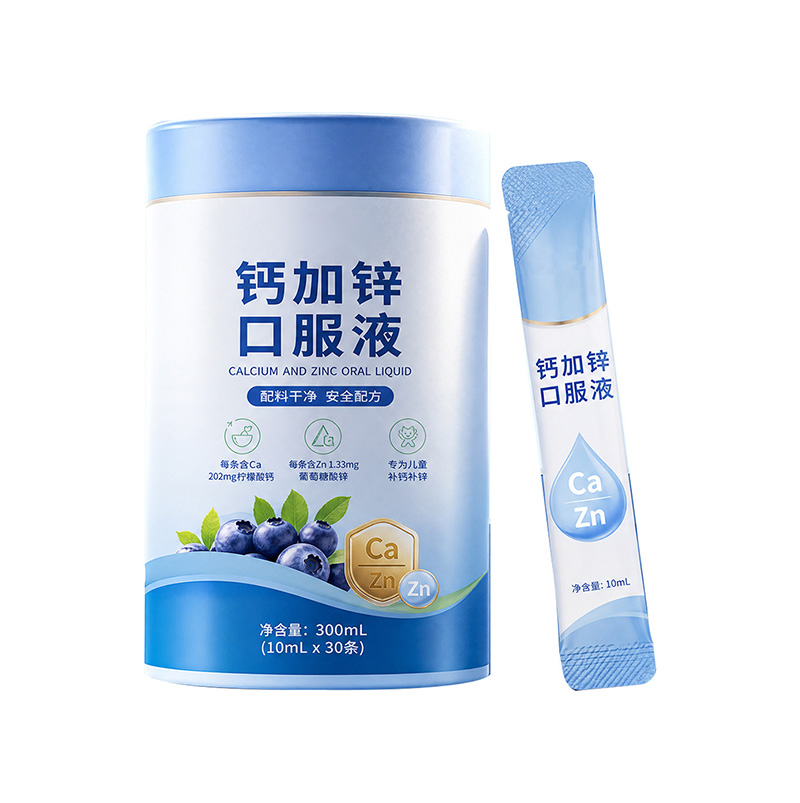
Calcium + Zinc Oral Liquid Blueberry Flavor | Zinc Gluconate Liquid Calcium Supplement for Kids OEM | Kids Liquid Calcium with High-Potency Vitamin K2 & D3 | Calcium Zinc Oral Liquid for Teens OEM
About Guangzhou Mesen Health Biotechnology Co., Ltd
Guangzhou Mesen Health Biotechnology Co., Ltd is located in the Huashan Science and Technology Park, Huadu District, Guangzhou. The company has focused on OEM and ODM services for the big health industry for nearly 20 years, operating dedicated research, production, sales and management centres, and maintaining long-term strategic partnerships with well-known Chinese medicine colleges and research institutions. Capabilities span pressed candy, gummies, capsules, solid beverages, herbal teas, plant beverages, protein powders, dietary supplements and enzyme jelly - from formulation development through contract manufacturing. For details on minimum order quantities, sampling lead times and quotations, see our manufacturing advantages and product range, or contact us for a tailored proposal.
Further Reading




