
Solid Beverage OEM Defect Troubleshooting: Caking, Separation, Poor Solubility and Swollen Pouches
Powdered drinks generate a disproportionate share of complaints, for an obvious reason: the customer opens the sachet and sees the state of the powder directly, then reconstitutes it in front of themselves. Whether it caked, whether it disperses, whether it has separated - all judged in seconds. In solid beverage OEM, these four complaints rarely have a single cause. The same caking can originate in moisture, formulation, packaging or warehousing, and the value of troubleshooting lies in turning the symptom into checkable clues rather than blaming dampness in general.
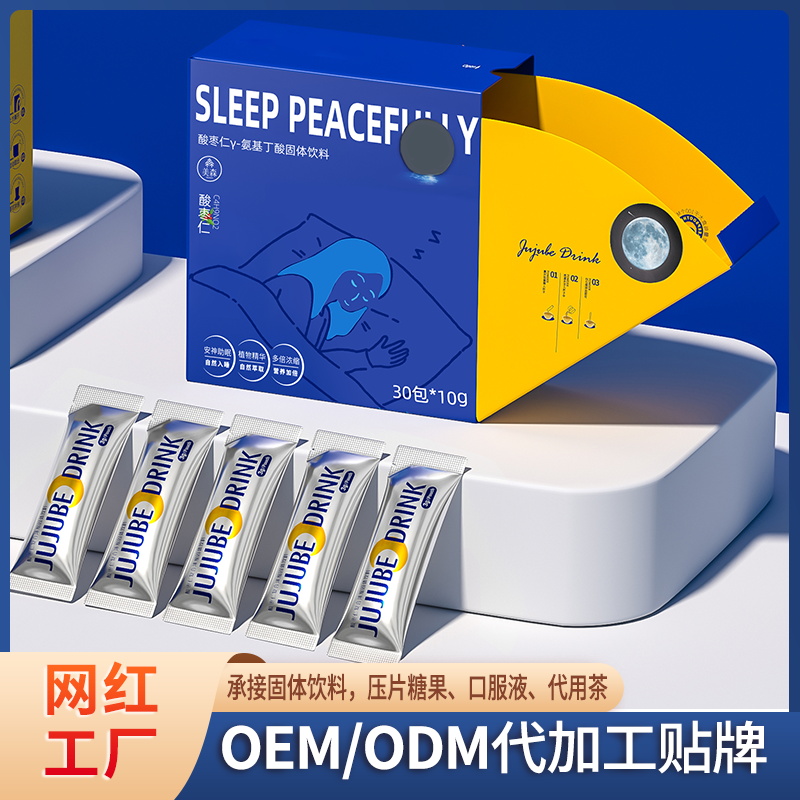
1. Caking: moisture first, glass transition second
Moisture is the first suspect, but the number alone is not enough. Powders high in sugar or low-molecular sugar alcohols have a low glass transition temperature and can cross it at ordinary temperatures - a summer delivery van can exceed 50°C - after which surfaces soften, stick and bridge between particles. Diagnosis comes from the form of the cake: lumps that fall apart under light pressure usually mean stacking compression; hard lumps needing to be broken mean glass transition or wetting followed by drying; tacky surfaces with darkening mean sugar has entered Maillard reactions. The fixes differ accordingly - better stacking and stiffer film for compression, a higher proportion of high-Tg carrier such as maltodextrin for glass transition, and a tighter moisture specification (typically 3-5% for powders) plus barrier film for moisture uptake.
2. Segregation: particle size spread and blending
Fines at the top of the bag, granules at the bottom, and a different taste and dose in every cup: classic segregation. Vibration and drops during transport re-sort particles by size and density, and the wider the distribution and the larger the density gap, the worse it gets. The remedies are to bring component particle sizes closer together - milling the extract to roughly the carrier's mesh - or to granulate so fines agglomerate into uniform granules. Blending matters just as much: too short a blend leaves it non-uniform, too long re-introduces segregation through size differences. Optimum blend time should be established by uniformity testing rather than assumed at fifteen minutes.
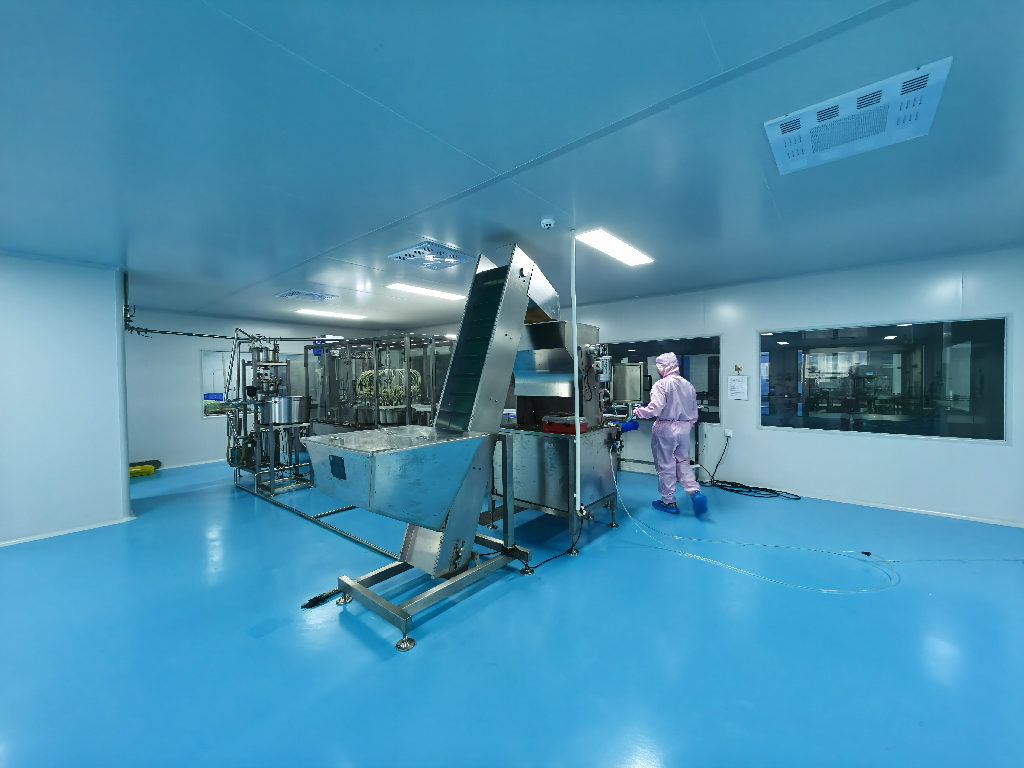
3. Poor dispersion: wetting, not solubility
Much of what is called "will not dissolve" is really "will not wet". Hydrophobic powders - those carrying fat-soluble actives or high protein levels - float, clump on contact, and form fish-eyes with a wet skin over a dry core. Three routes help: granulating fines into porous granules so water wicks in by capillary action; adding a wetting agent such as lecithin or a sucrose ester; or changing the preparation instructions to make a paste with a little warm water first, which is the cheapest rescue when the formulation cannot move. Dispersion should be quantified by wetting time and dispersion time under fixed conditions, not described subjectively.
4. Swollen pouches: microbial or chemical
A swollen pouch has to be classified immediately, because the responses are unrelated. Microbial gas comes with sour, alcoholic or musty notes and confirms on microscopy or culture, and its roots lie in raw-material load, high water activity or inadequate heat treatment. Chemical gassing appears in formulations combining carbonate with organic acid, as in effervescent products: trace moisture drives a slow reaction releasing carbon dioxide, with no off-odour but steadily rising pressure. There is also a false swelling, where a pouch expands at altitude or in air freight and recovers on landing. Identify before acting, or the correction goes the wrong way.
5. Flavour fade and browning
Stale notes, rancidity or darkening after storage follow three paths: lipid oxidation, typical wherever milk powder, nut powder or marine collagen is present; Maillard browning, where reducing sugars co-exist with amino compounds and accelerate with heat and moisture; and flavour loss or oxidation, particularly with citrus oils. The countermeasures are antioxidants plus oxygen-barrier film, controlling the co-presence of reducing sugars and amino sources while keeping moisture down, and using encapsulated flavours with cooler storage. All three show a trend within one month of accelerated testing, so there is no need to wait for market feedback.
6. Keep a defect log
Disciplined plants keep a defect log per SKU: batch, symptom, diagnostic path, root cause, corrective action and verification. The second occurrence of a problem then takes minutes rather than days, and recurring patterns tied to a line or a supplier lot become visible. When auditing, ask to see six months of deviation records. The point is not whether deviations exist - they always do - but whether they are recorded and closed out. A factory with no records has not solved its problems; it has not written them down.
Related Products
White Kidney Bean Black Coffee Latte Powder | Instant Keto Enzyme Coffee Solid Beverage OEM Private Label | Protein Berry Meal Replacement Shake Powder | Satiety Smoothie Solid Beverage Custom OEM
About Guangzhou Mesen Health Biotechnology Co., Ltd
Guangzhou Mesen Health Biotechnology Co., Ltd is located in the Huashan Science and Technology Park, Huadu District, Guangzhou. The company has focused on OEM and ODM services for the big health industry for nearly 20 years, operating dedicated research, production, sales and management centres, and maintaining long-term strategic partnerships with well-known Chinese medicine colleges and research institutions. Capabilities span pressed candy, gummies, capsules, solid beverages, herbal teas, plant beverages, protein powders, dietary supplements and enzyme jelly - from formulation development through contract manufacturing. For details on minimum order quantities, sampling lead times and quotations, see our manufacturing advantages and product range, or contact us for a tailored proposal.
Further Reading




