
Gummy OEM Quality Control: Water Activity, Texture and Microbial Release Criteria
Gummy quality problems share one trait: they are invisible at dispatch. The piece leaves the mould clean, demoulds well and looks right in the pack, and only after two or three months in storage does weeping, graining, blocking or mould appear. That is why gummy quality control cannot rest on finished-goods testing alone. Judgement has to move upstream to in-process parameters and semi-finished material. This guide sets out where to sample in gummy OEM, which attributes to measure, and why water activity predicts shelf life better than moisture content does.

1. Moisture content and water activity are not the same thing
Moisture content says how much water is in the piece. Water activity says how much of that water is free, available to microorganisms or able to migrate. Two gummies may both sit at 18 percent moisture, but with different polyol ratios their Aw can be 0.60 and 0.68, and the second carries clearly higher mould risk. In-house specifications therefore carry both: moisture held between 14 and 20 percent, Aw held at or below 0.65. Most bacteria cannot grow below about 0.85, while yeasts and moulds stop somewhere around 0.60 to 0.70, so pushing Aw under 0.65 with sensible packaging usually removes any need for preservatives.
Both values must be recorded when the batch leaves the drying room, not reconstructed at finished-goods inspection. An under-dried batch cannot be rescued after packing.
2. Texture: turning mouthfeel into a number
Gummy texture has long depended on sensory panels, which vary between assessors and cannot be written into a specification. The practical alternative is TPA analysis on a texture analyser, quantifying hardness, springiness, chewiness and resilience, with the accepted range fixed into the process file at first-article approval. Later batches are compared on the same instrument, same probe and same test speed, and anything outside the range fails.
Texture is temperature-dependent, so testing must follow equilibration at a controlled 20 to 25 degrees Celsius for at least two hours. Syneresis deserves more attention than it usually gets: hold the sample at a defined temperature, weigh the liquid expelled, and a result above the limit indicates a gel network that has contracted too far, typically from too much acid or over-drying.
3. Microbiology: where the real risk sits
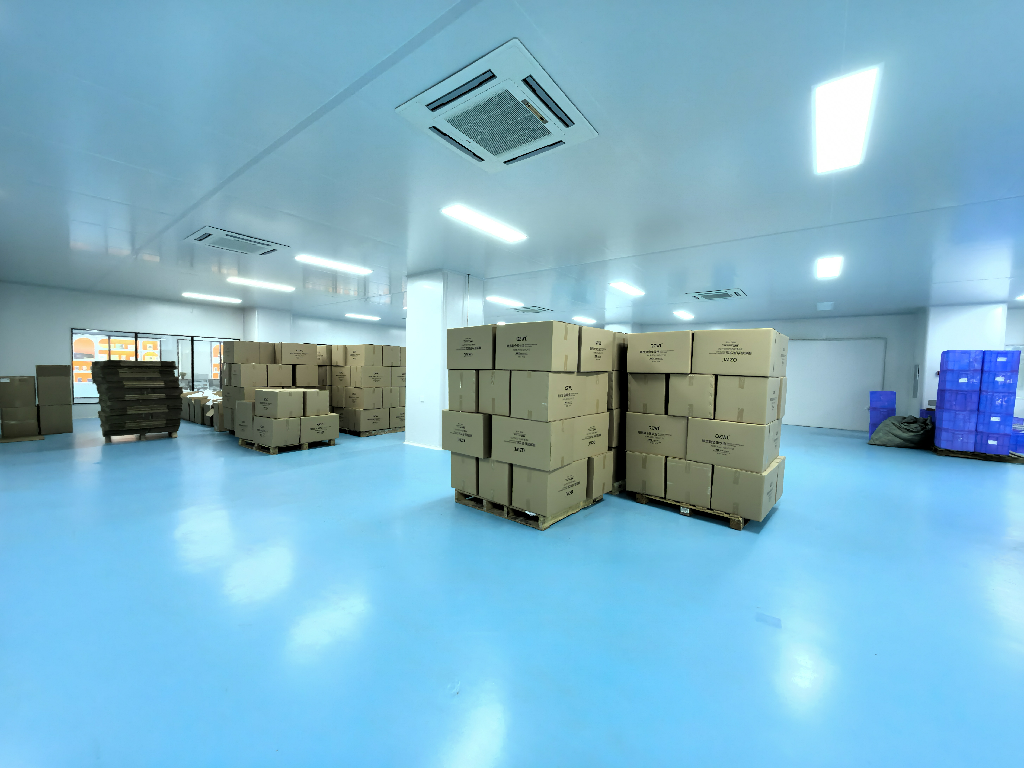
A gummy is not a friendly medium for microbial growth, so risk concentrates in three places. Incomplete drying, which leaves Aw high enough for surface mould. The cooling and packing environment, where the warm sugar surface is exposed and picks up airborne mould very easily. And the hygiene status of oiling or sanding materials. Air cleanliness in the cooling and packing rooms, hand sanitation and utensil hygiene therefore matter more than any finished-product treatment.
Release criteria follow GB 17399 and GB 29921: total viable count, coliforms, mould and yeast. Export orders add whatever the destination requires for salmonella and staphylococcus aureus. Retaining samples from every batch and holding them at 37 degrees as an accelerated check will surface latent mould problems before shipment.
4. Weight variation and appearance
Piece-to-piece weight variation is the most common source of complaints. Depositor accuracy, viscosity drift and mould wear all contribute. In-house control typically holds individual pieces within plus or minus 5 percent of mean weight, sampling at least 20 pieces per batch. Appearance defects - bubbles, tails, chipped edges, sticking and colour variation - should be judged against an AQL sampling plan, with a reference limit sample agreed and sealed by both parties at first-article stage so that nobody argues later about what counts as a defect.
5. The correct sequence for release
Sound release runs through three gates. The first is at the drying room exit: moisture and Aw, with failures returned to drying or downgraded. The second is before packing: texture, appearance and weight variation. The third is on finished goods: microbiology and net content. All three must pass. Most quality disputes trace back to collapsing these three gates into a single finished-goods test, by which point a failing batch cannot be reworked, only scrapped.
Related Products
Greens Gummies with Multivitamin, Spirulina & Prebiotic Fiber | GREENS GUMMIES Supplement OEM | Feminine Balance Probiotic Gummies with Cranberry | Feminine Balance Gummies OEM
About Guangzhou Mesen Health Biotechnology Co., Ltd
Guangzhou Mesen Health Biotechnology Co., Ltd is located in the Huashan Science and Technology Park, Huadu District, Guangzhou. The company has focused on OEM and ODM services for the big health industry for nearly 20 years, operating dedicated research, production, sales and management centres, and maintaining long-term strategic partnerships with well-known Chinese medicine colleges and research institutions. Capabilities span pressed candy, gummies, capsules, solid beverages, herbal teas, plant beverages, protein powders, dietary supplements and enzyme jelly - from formulation development through contract manufacturing. For details on minimum order quantities, sampling lead times and quotations, see our manufacturing advantages and product range, or contact us for a tailored proposal.
Further Reading




