
Solid Beverage OEM Raw Materials: Peptides, Fibre and Fruit Powders Compared by Spec
Solid beverages cover the widest ingredient range of any format. All of them are powders, but the material logic behind a protein blend, a meal replacement, a fruit and vegetable enzyme powder and a probiotic sachet barely overlaps, and neither do the acceptance criteria. The common brand-side mistake is applying one checklist to everything, which either inflates testing cost or misses the attribute that actually matters. This guide breaks down the key specifications by category for solid beverage OEM work.
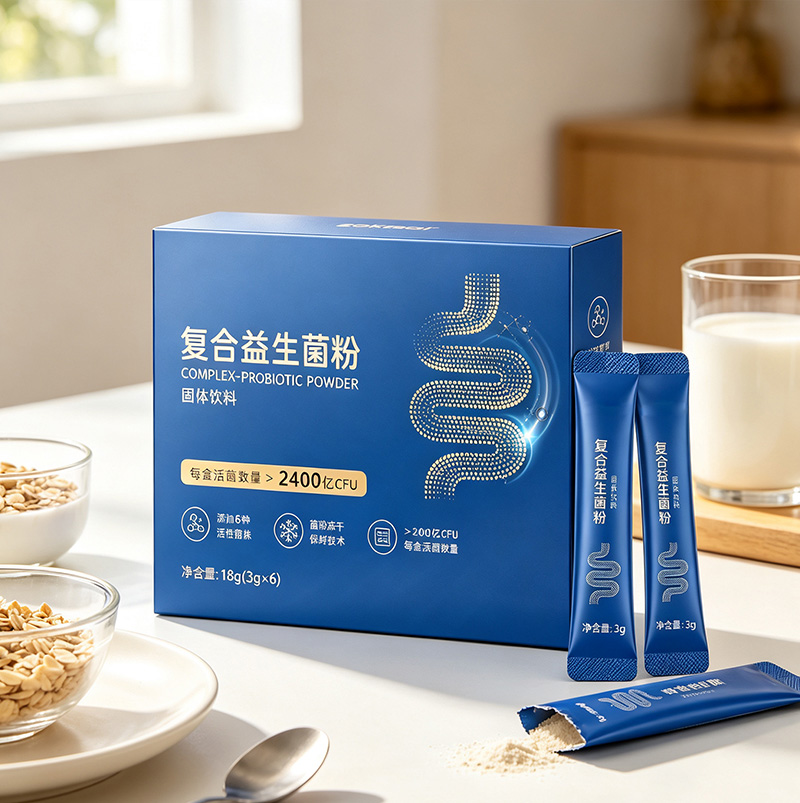
1. Define the category before the ingredient framework
Protein-led powders centre on whey, soy isolate, pea protein or collagen peptides, where protein content, amino acid profile and solubility matter. Meal replacements turn on dietary fibre, vitamin and mineral premixes and satiety design. Fruit and vegetable powders are judged on colour, flavour and pesticide residues. Probiotic powders live or die on viable count, strain compliance and water activity. Different framework, different test list - that is the first step of selection.
2. Proteins and peptides: how content is calculated and verified
The most frequent dispute over protein materials is content that does not match expectations, and it usually comes down to the basis of calculation. Whey powders are often quoted on a dry basis, while finished-product testing is run on the as-is material; differences in moisture and ash account for several percentage points. State the basis explicitly in both the purchase contract and the finished label.
For peptides such as collagen peptides or soy peptides, molecular weight distribution and peptide content matter alongside protein content. Distribution drives dissolution speed and bitterness: lower molecular weight dissolves faster but can taste more bitter. Require distribution or peptide content data from the supplier and retest on every lot.

Adulteration checks deserve separate attention. Adding non-protein nitrogen to protein materials is a long-standing industry problem, and Kjeldahl measures total nitrogen rather than true protein. For critical materials, and certainly for a first lot from a new supplier, supplement with amino acid profiling or a true protein method.
3. Dietary fibre and prebiotics
Fibre materials include resistant dextrin, fructo-oligosaccharides, isomalto-oligosaccharides, inulin and polydextrose. The essential point is that the test method must match the claim. Enzymatic gravimetric and chromatographic methods return noticeably different results, and the fibre figure on a label must be produced by the method the national standard specifies, or the declaration is treated as inaccurate.
Prebiotics also need attention to degree of polymerisation and purity. FOS at different purities differs substantially in sweetness and hygroscopicity, which shifts the sweetener system and powder flow. Inulin chain length changes solubility and mouthfeel: long-chain inulin reads closer to fat, short-chain is sweeter and picks up moisture faster.
4. Fruit and vegetable powders: colour drift and residues
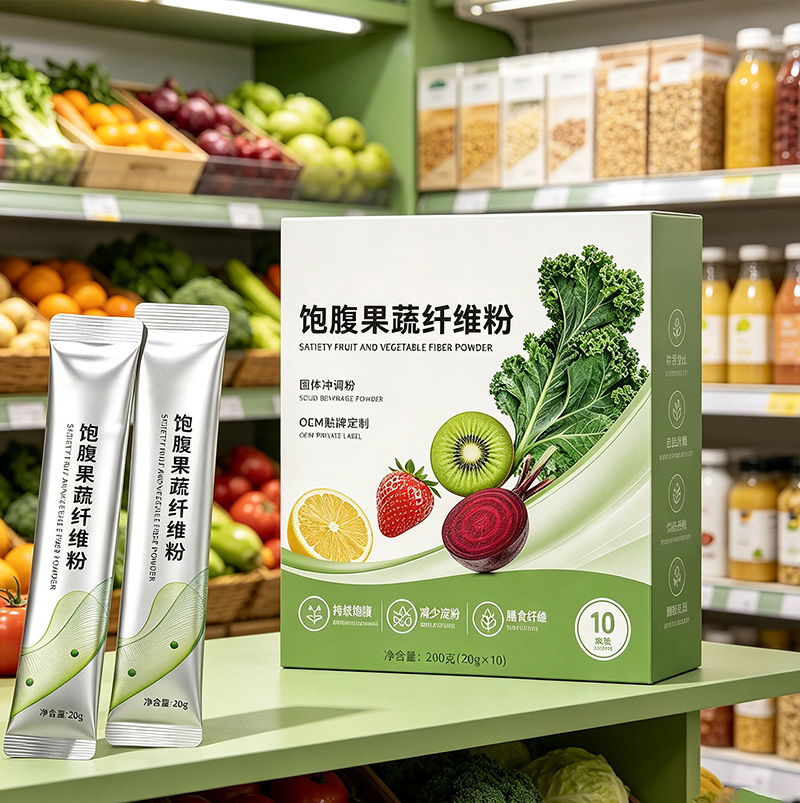
The dominant problem with fruit and vegetable powders such as blueberry, spinach or beetroot is batch-to-batch colour variation. Origin, harvest season and drying method all move the colour, so two production runs of the same formula can look visibly different and consumers read that as inconsistent quality. The control is an internal colour specification measured as L/a/b values on a colorimeter, combined with a compensating natural colour in the formula design.
Botanical extracts call for a different focus: pesticide residues, heavy metals, residual solvents and the extraction ratio. A ratio such as 10:1 says nothing about actives content. Purchase against the measured level of the marker compound - total flavonoids, polysaccharides, saponosides - rather than paying on extraction ratio alone. Several extracts also carry defined daily intake limits, so inclusion has to be back-calculated from the recommended daily serving.
5. Acceptance checks and storage
Whatever the category, the baseline list covers sensory attributes, moisture, microbiology including total plate count, coliforms, mould and pathogens, heavy metals covering lead, arsenic, cadmium and mercury, and the target activity marker. Powders additionally need particle size distribution and bulk density, both of which drive blend uniformity and filling accuracy downstream.
On storage, most powders are hygroscopic and belong below 25 degrees Celsius and 60 percent relative humidity, with opened bags resealed, labelled and used quickly. Probiotics and enzymes need cold chain for storage and transport, and that belongs in the contract; without it, responsibility for activity loss is impossible to apportion.
Related Products
White Kidney Bean Black Coffee Latte Powder | Instant Keto Enzyme Coffee Solid Beverage OEM Private Label | Protein Berry Meal Replacement Shake Powder | Satiety Smoothie Solid Beverage Custom OEM
About Guangzhou Mesen Health Biotechnology Co., Ltd
Guangzhou Mesen Health Biotechnology Co., Ltd is located in the Huashan Science and Technology Park, Huadu District, Guangzhou. The company has focused on OEM and ODM services for the big health industry for nearly 20 years, operating dedicated research, production, sales and management centres, and maintaining long-term strategic partnerships with well-known Chinese medicine colleges and research institutions. Capabilities span pressed candy, gummies, capsules, solid beverages, herbal teas, plant beverages, protein powders, dietary supplements and enzyme jelly - from formulation development through contract manufacturing. For details on minimum order quantities, sampling lead times and quotations, see our manufacturing advantages and product range, or contact us for a tailored proposal.
Further Reading




