Unit-Level Traceability Codes in Food OEM: Anti-Counterfeit and Channel Control
Plenty of brands write unit-level coding into the brief at project stage and then discover on the line that it is harder than expected. The code prints but will not scan. It scans but the data never uploads. The data uploads but one link between bottle and case is missing. The aggregation is complete and grey-market sales still cannot be traced. The problem is never the code itself but whether the whole system closes the loop. Batch traceability answers which materials went into a lot and which customer received it. Unit-level coding answers which line produced each individual item, where it went and who bought it. The two sit at different levels and demand different work. This is how unit-level traceability works in food OEM, covering code application, pack-level aggregation, data upload, scan verification, and the separate jobs of anti-counterfeiting and channel control.

Batch traceability and unit-level coding are different levels
Batch traceability runs on a lot number. One number maps to the materials, process parameters and inspection records of a defined period, which is simple and cheap, and enough to contain a problem and run a recall. Unit-level coding pushes granularity down to the smallest saleable unit: every item carries a unique code, which must be applied individually, aggregated individually and uploaded individually, at visibly higher cost. The value differs too. Batch traceability serves quality and recall. Unit-level coding also supports anti-counterfeiting, channel control and consumer engagement. So the first question is not technical but commercial: does this project need quality traceability, or does it need channel control and anti-counterfeiting? If recall alone is the driver, batch traceability with a clear numbering rule may already be sufficient. Once multi-region distribution, online price erosion or counterfeiting is in play, unit-level coding earns its cost. Settle the requirement first, and equipment selection follows.
Code application and carrier selection
Application has to satisfy the packaging material, the line speed and the durability of the mark. Plastic bottles usually take laser marking or a printed label, the former saving consumables but limited by bottle material and colour, since poor contrast on a pale label defeats the reader. Flexible packs and laminates usually take thermal transfer or inkjet, and the ink must be proven not to rub off under friction, cold or moisture. Cartons can be coded or pre-printed, pre-printing being cheaper but dependent on the printer and inflexible. The symbology matters as much as the method: QR codes carry more data and correct errors well, which suits consumer scanning and channel verification, while linear barcodes read faster in a warehouse, and the two can coexist on the same item. Always run a real read test with the actual scanner at the fastest line rate and confirm first-read rate, rather than judging sharpness from a sample print.
Aggregation from item to case to pallet
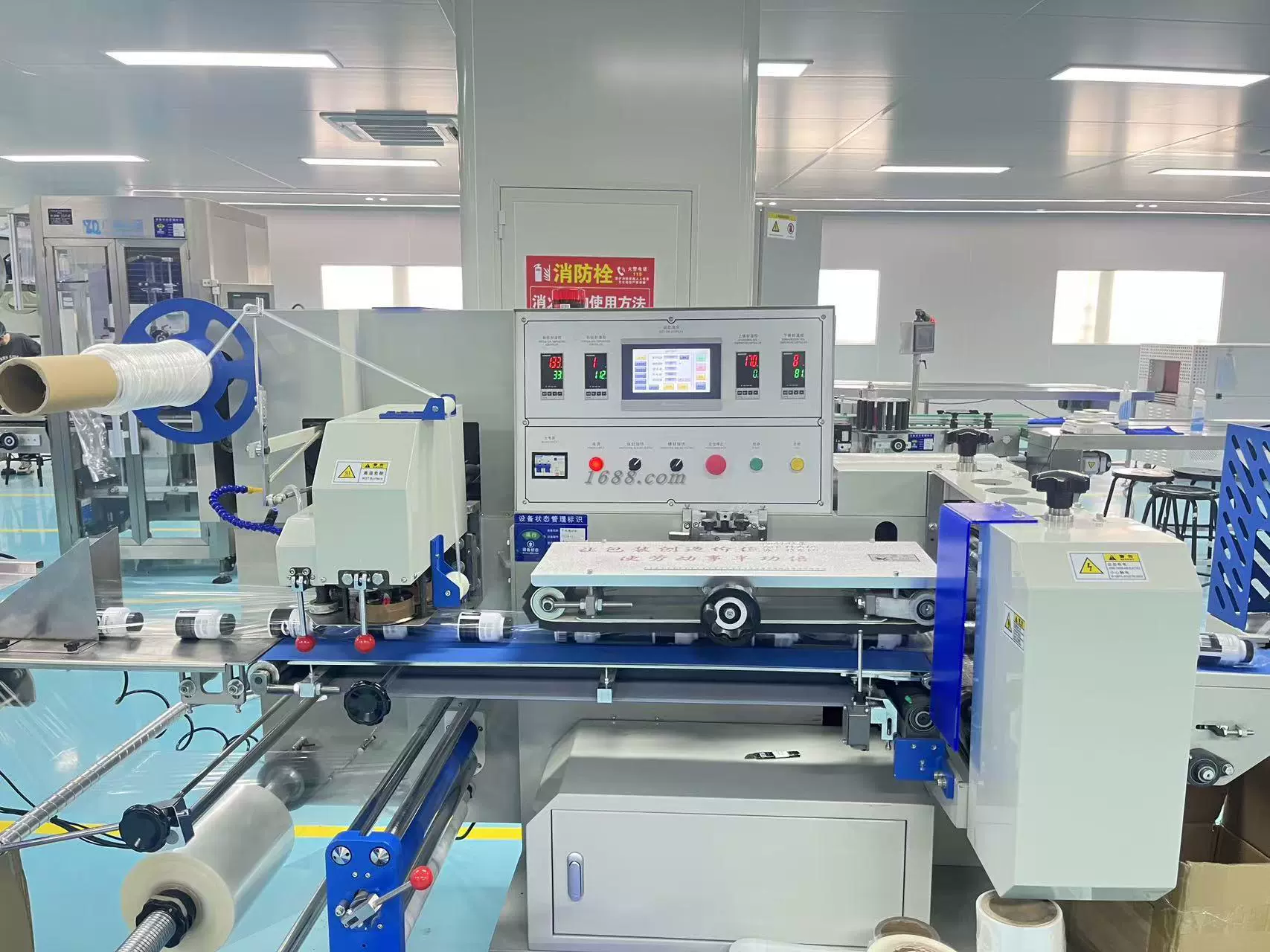
Aggregation is the hardest part of unit-level coding and the easiest to cut corners on. Product moves from individual pack to multipack to case to pallet, and every level needs a parent-child relationship to make reverse traceability possible. Typical breaks include manual scanning at case packing that misses codes whenever the line speeds up, leaving gaps under a case code; pallet codes never closed against case codes, so a shipment cannot be verified by pallet; and no break-number handling at batch or format change, so codes from two lots end up mixed. The workable approach is to embed the aggregation step in the line rhythm, automate every read that can be automated rather than patching with manual scans, add verification at case packing and palletising so a missed read alarms instead of passing, and define rules for break numbers and duplicates so an exception can be traced to a specific item.
Data upload and scan verification
A code that never reaches a database is a dead code. Two things have to work at the coding station: capture and upload. Capture must record a unique code, production date, lot number, line and station, with an accurate timestamp. Upload must survive network outages and interface failures, caching locally and re-sending afterwards rather than dropping records. Once data is flowing, verify with a real scan: use the consumer app or the platform to confirm that product information and flow direction are returned, and for traceability confirm that a code resolves back to its batch and inspection records. Watch two details in particular, the lag between first capture and final upload, and how exception codes are flagged in the system. Both reveal how well the factory actually manages its data.
Channel control: regional codes and flow visibility
The point of channel control is not to lock goods down but to make their movement visible. The usual method binds a target region or distributor at coding, then records flow step by step through distributor dispatch scans and terminal redemption scans, so that a batch appearing repeatedly outside its authorised region raises an automatic alert. A few practical points matter. Regional binding needs room for legitimate explanation, distinguishing genuine cross-region transfer from a violation, or the system will cry wolf. Incentives and penalties have to work together: penalties alone push channels to scrape codes off, incentives alone leave no constraint. Redemption data must come from a real sales event, otherwise channels will simply scan in bulk to satisfy the system.
Anti-counterfeiting: layering and consumer verification
Anti-counterfeiting addresses copying. A single measure is easy to defeat, so measures are layered: a scratch-off covert code paired with an open code for scanning; printing techniques such as microtext, optically variable ink or holograms to raise the cost of imitation; and one-time opening features that leave visible traces. Consumer experience matters just as much. The verification entry point must be simple and the result immediate, rather than leaving the shopper to interpret a wall of data, and first-time versus repeated queries must be distinguished so a repeat query raises a risk flag. Avoid over-relying on covert technology at the expense of usability, because a verification route nobody bothers to use provides no protection at all.
Unit-level coding is not a purchase order for a marker; it is a system that depends on the line, the platform and the channel working together. To judge whether a contract manufacturer can deliver it, ask four questions: how codes are applied and how the read test is done, whether aggregation is automated or manual, how data is re-sent after an outage, and how exception codes are flagged and handled. Answer those clearly and the traceability system genuinely stands up.
Related Products
Vitamin D3 K2 with Magnesium & Zinc Softgels | VITAMIN D3+K2 MAGNESIUM+ZINC Softgels OEM | Calcium + Magnesium + Zinc + Vitamin D3 Softgels | CALCIUM+MAGNESIUM+ZINC D3 Softgel OEM
About Guangzhou Mesen Health Biotechnology Co., Ltd
Guangzhou Mesen Health Biotechnology Co., Ltd is located in the Huashan Science and Technology Park, Huadu District, Guangzhou. The company has focused on OEM and ODM services for the big health industry for nearly 20 years, operating dedicated research, production, sales and management centres, and maintaining long-term strategic partnerships with well-known Chinese medicine colleges and research institutions. Capabilities span pressed candy, gummies, capsules, solid beverages, herbal teas, plant beverages, protein powders, dietary supplements and enzyme jelly - from formulation development through contract manufacturing. For details on minimum order quantities, sampling lead times and quotations, see our manufacturing advantages and product range, or contact us for a tailored proposal.
Further Reading