
Process Validation in Food OEM: IQ, OQ, PQ and Three-Batch Runs
One of the most common questions in a contract manufacturing project is whether a line can actually produce the target product consistently. That question cannot be answered with an assurance, or with the result of a single trial run. It is answered with validation. The word gets used loosely - sometimes meaning equipment acceptance, sometimes meaning the first production run - but properly it is a layered chain of evidence. The equipment is installed correctly, the equipment performs as specified, and the process delivers conforming product under real conditions. All three must hold in sequence before the conclusion stands. In food contract manufacturing, process validation is the step that turns something that can be made into something that can be made reliably. This article sets out what each layer answers.

The three layers
Each layer answers a different question. Installation qualification asks whether equipment is installed as designed: whether model and specification match the purchase requirement, whether utilities are in place, and whether material certificates and instrument calibration records are complete. Operational qualification asks whether the equipment runs at set parameters with no load or a simulated load, and whether speed, temperature, pressure and dosing accuracy are controllable and repeatable. Performance qualification asks whether, under real production conditions at commercial scale with actual materials, the process consistently delivers product that meets specification. The order matters. Run operational qualification before installation is confirmed and the data mean nothing; run performance qualification before operational qualification and the process carries the blame for equipment problems.
What installation qualification covers
Installation qualification is often reduced to an unboxing check, but there is more to verify. First, the equipment itself: nameplate data, materials of critical components, and the surface finish and weld quality of product-contact surfaces. Second, connections: whether water, power, gas, steam and compressed air supplies match requirements, whether compressed air needs oil and water removal, and whether steam is filtered. Third, instruments: every instrument affecting product quality should carry a calibration status and expiry - temperature probes, pressure gauges, flow meters and load cells all included. Fourth, documentation: manuals, drawings, material certificates, calibration certificates and spare parts lists should be filed. Finally, safety: guards, emergency stops and interlocks should be functional. Check these off with records and later qualification stages will not keep stalling on basic problems.
Operational qualification: empty and simulated loads
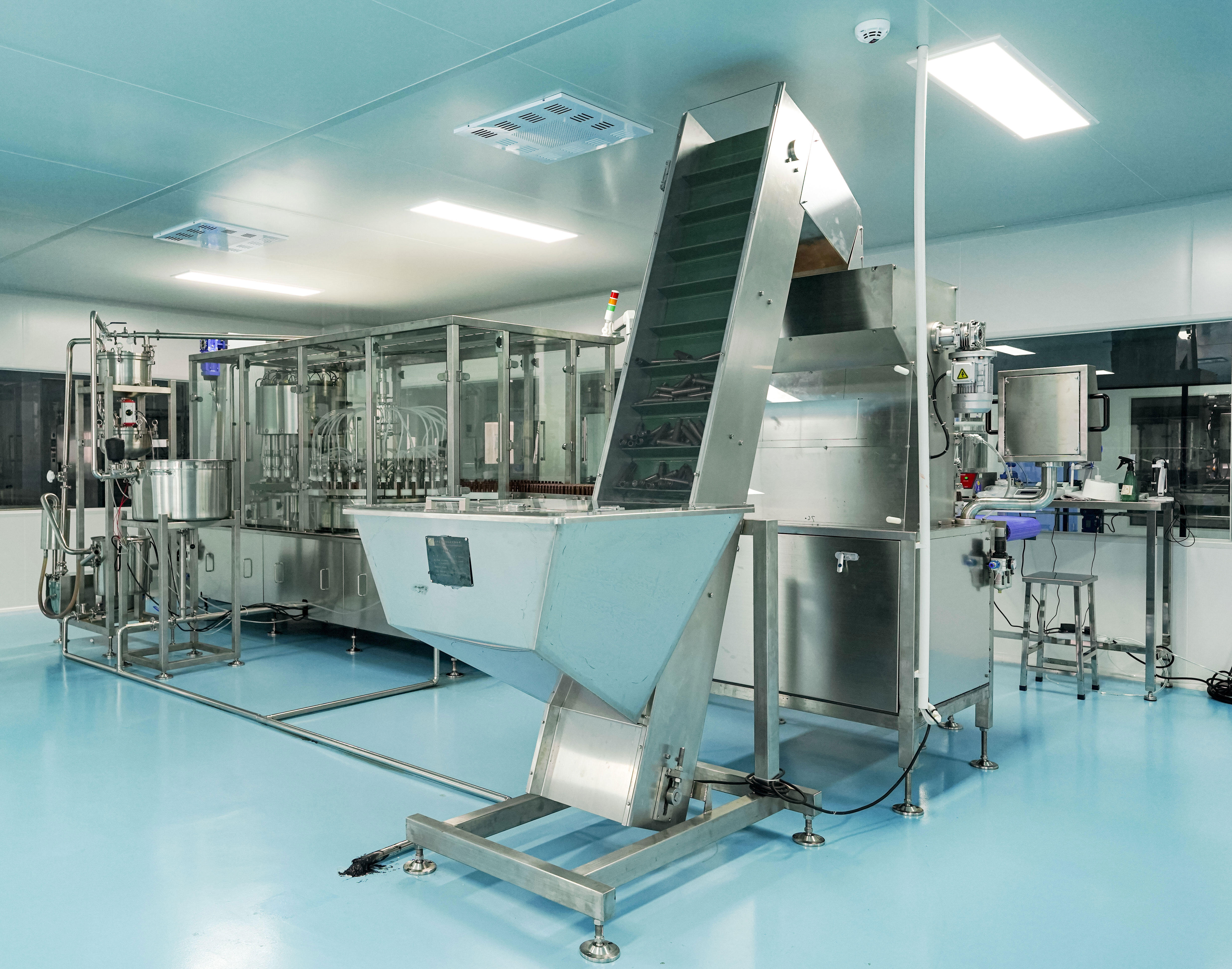
Operational qualification normally runs in two steps. Testing with no load confirms the equipment's own controllability: empty-chamber heat distribution for a steriliser, running stability and speed control for a blender, stroke and timing accuracy for a filler running dry. Testing with simulated material confirms process capability, using a substitute with rheology close to the real product for filling, granulation or blending, and checking dosing accuracy, blend uniformity and stability over a continuous run. The value of this step is finding problems without consuming real raw material - inadequate auger accuracy, slow valve response, or temperature control that drifts too widely. The parameters tested should cover the upper and lower limits the process permits. A single test near the middle cannot demonstrate that the boundaries hold.
Performance qualification and the three-batch rule
Performance qualification uses real material under real conditions, and the conventional approach is three consecutive batches. The point of three is not the number itself but evidence that the process is reproducible between batches, so the runs should use different raw material lots, different crews or different time periods to cover normal variation as far as possible. Each batch needs a full record of critical process parameters, with in-process sampling of critical quality attributes - appearance, assay or marker content, moisture or water activity, microbiology and packaging quality. Acceptance criteria and deviation handling belong in the protocol beforehand, not in a decision made after the results arrive. Only when all three batches meet specification is the process considered qualified; if one fails, investigate, correct and revalidate.
Routine monitoring and continued verification
Passing validation is the starting point; the work afterwards is holding the validated state. Routine monitoring covers critical process parameters and critical quality attributes - the former through equipment records and batch records, the latter through scheduled in-process sampling and finished product testing. Frequency can be risk-based, with higher-risk parameters checked more often. Beyond parameters, monitor the factors that erode process capability: equipment wear, cleaning verification results, ambient temperature and humidity, and personnel changes. When monitoring data shows a trend, intervene early rather than waiting for a control limit to be breached. This continued verification mindset is closer to how real production actually varies than a one-off study is.
Triggers for revalidation
Revalidation turns validation into part of the system. The usual triggers are: major equipment overhaul or replacement of critical components affecting the process; substantive change to the process specification, such as adjusted temperature, time or ratio; a significant change in raw material or packaging specification; an abnormal trend in monitoring data that cannot be explained by ordinary causes; and routine periodic revalidation. Once the triggers are written down, revalidation stops depending on individual judgement and becomes a planned activity. The protocol, data and conclusion of each revalidation should be filed with the original validation file to form a complete evidence chain - the most persuasive material available during a customer audit or a system review.
The value of process validation is converting a claim into evidence a customer can inspect. Equipment installed as designed, running controllably within its specified range, and delivering three consecutive conforming batches with real material - with routine monitoring and clear revalidation triggers on top - turns process stability from a matter of opinion into a traceable fact.
Related Products
Milk Thistle, Kudzu & Turmeric Beverage with Sea Buckthorn Puree & Honey | Herbal Oral Liquid OEM | Liquid Fruit & Vegetable Salad Fiber Drink | Dietary Fiber Meal Replacement Vegetable Juice Beverage OEM
About Guangzhou Mesen Health Biotechnology Co., Ltd
Guangzhou Mesen Health Biotechnology Co., Ltd is located in the Huashan Science and Technology Park, Huadu District, Guangzhou. The company has focused on OEM and ODM services for the big health industry for nearly 20 years, operating dedicated research, production, sales and management centres, and maintaining long-term strategic partnerships with well-known Chinese medicine colleges and research institutions. Capabilities span pressed candy, gummies, capsules, solid beverages, herbal teas, plant beverages, protein powders, dietary supplements and enzyme jelly - from formulation development through contract manufacturing. For details on minimum order quantities, sampling lead times and quotations, see our manufacturing advantages and product range, or contact us for a tailored proposal.
Further Reading




