
Brewing and Extraction Curves in Herbal Tea OEM: Time and Heat
With herbal teas, the taste a consumer finally experiences is not decided by raw material alone; how it is brewed often matters more than the blend itself. The same material brewed quickly with boiling water, or left five minutes at eighty degrees, yields quite different aroma, astringency and sweetness, and the liquor colour can shift a whole shade. In herbal tea OEM, brewing is part of product design: it determines particle size, blend ratios and how the instructions read, and it decides whether the first cup and the third cup taste consistent. This article covers extraction behaviour, water temperature and time, and particle and filter matching.
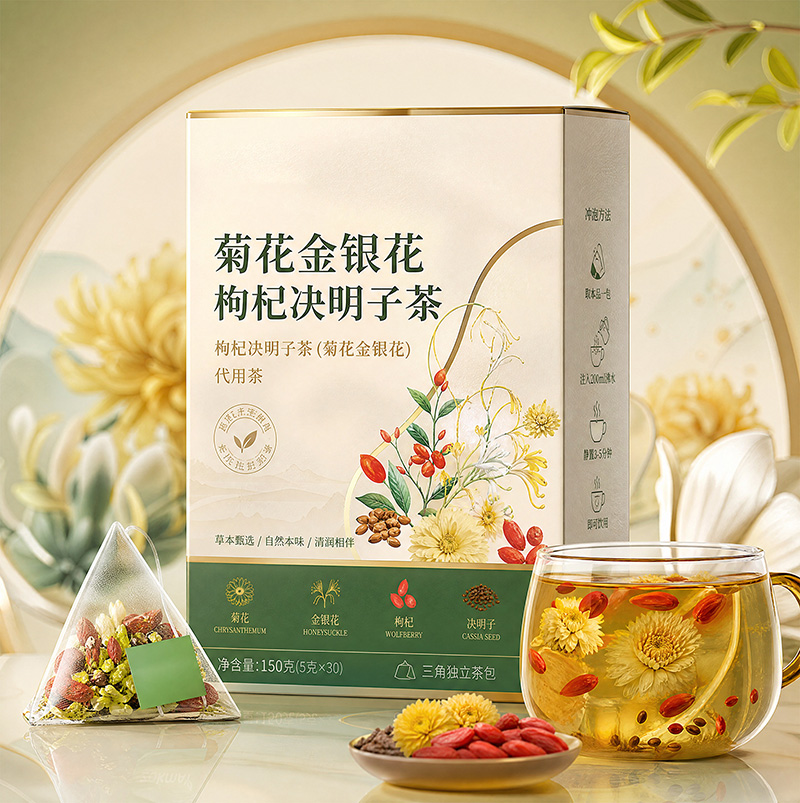
What an extraction curve tells you
Brew the same material repeatedly under fixed conditions and measure the extracted solids and key flavour compounds in each infusion, and you get an extraction curve. The shape is usually a rapid rise at the front followed by a flattening tail: the first infusion releases a large share of water-soluble material in a short time, the second is weaker, and by the third the yield drops away noticeably. The shape depends on cell structure, particle size and component solubility, and it sets how many brews the product suits and how long each should take. Judging a material by its curve is more useful than a single total-extract figure, because the curve shows whether flavour is concentrated in the first infusion or released gradually - which directly affects how the product is used and whether it is bought again.
The effect of water temperature
Temperature mainly changes how fast two groups of compounds come out. Readily soluble sugars, organic acids and some amino acids release fairly quickly even at lower temperatures and are less temperature-sensitive. Polyphenols, some alkaloids and aroma compounds need higher temperatures to release fully; too cool and the cup is thin and faint, too hot and bitterness and astringency come out with the aroma. Sensitivity varies by material: flowers and herbs lose aroma at high temperature, while roots, stems and fruits often need hotter water to extract properly. Brewing instructions should therefore set temperature from the dominant materials in the blend, rather than stating boiling water for every product.
Time and number of infusions
Time is the most direct lever on yield, but its effect on flavour is not linear. A short brew brings out front-end aroma and sweetness; longer contact draws out back-end astringency and bitterness, and past a certain point flavour degrades faster than yield rises. Instructions should therefore quote the time for best flavour, not maximum extraction. How many infusions to recommend depends on the curve: a gently declining curve supports more brews, a steep one suits fewer brews or a larger single dose. Where the first three cups must stay consistent, adding a proportion of slower-releasing material flattens the overall curve.
Particle size and filter bag matching
Particle size governs both extraction speed and filter fit. Finer particles have more surface area and extract faster, but pass through the bag easily and leave fine suspension that muddies the liquor and texture. Coarser particles extract slowly, so early cups taste thin and flavour arrives late. The usual practice is to cut material into a defined length or mesh range and control the fines fraction, so extraction rate matches the bag's pore size. Bag material and construction matter too: a large pore lets fines through, a small one clogs with fines during brewing and starves the later infusions. Once particle size and bag are chosen, confirm with an actual brew rather than judging from the appearance of a sample.
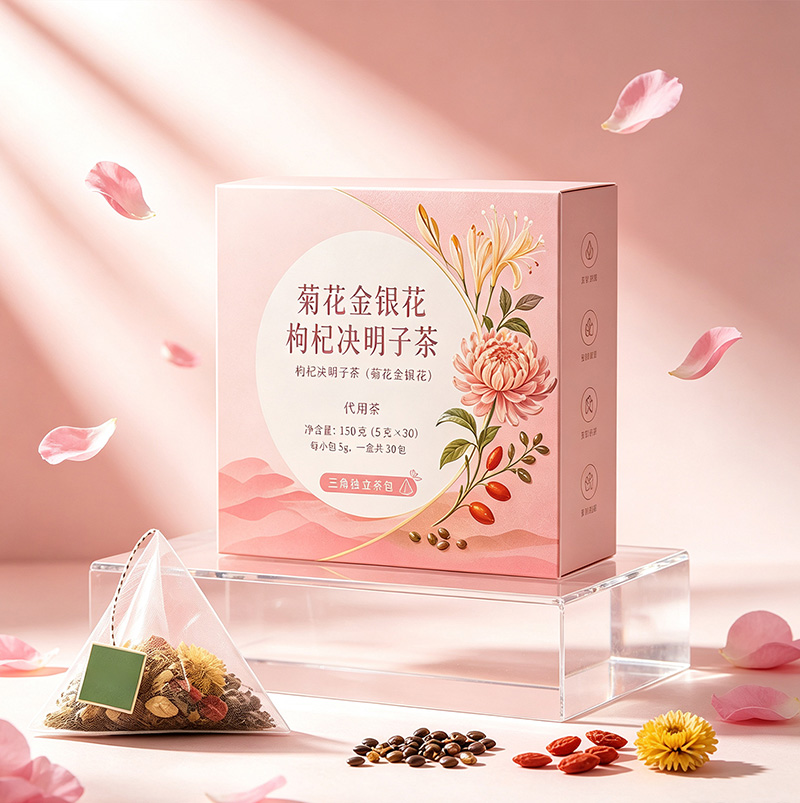
How material form changes things
Whole leaf, cut material, granules and powder behave very differently. Whole leaf keeps its structure, extracts slowly and gives good layering, suiting multiple infusions. Cut material extracts faster and suits single large-cup use. Granules are usually agglomerated, extract evenly and resist fines, which suits bagged products that need consistent liquor. Powder extracts fastest but clumps and settles, so it is normally used with other forms. Blending the forms adjusts overall extraction rhythm - cut material for front-end aroma, granules for mid-palate body, a little powder to lift the tail. Form blending is one of the most overlooked parts of herbal tea formulation and one of the most influential on the drinking experience.
Calibrating instructions with sensory and data
Finalising brewing instructions should rest on two kinds of evidence. The first is sensory: trained tasters evaluate across temperatures and times, recording changes in aroma, taste, liquor colour and aftertaste to locate the best-flavour window. The second is data: extracted solids, soluble solids and key compound concentrations under the same conditions, which explain the substance behind the taste change. Together they support instructions that taste good and can be reproduced - a temperature range, a steeping time and a sensible number of infusions, matched to the actual particle size and bag specification rather than contradicting the product.
Brewing design for herbal tea is essentially translating a material's extraction behaviour into parameters a consumer can follow. The curve sets the limits on infusion count and dose, temperature and time set the direction of flavour, and particle size and bag decide whether that direction repeats reliably. Settle these at design stage and shelf performance will match the laboratory sample, and the first cup a consumer brews will be the cup the product was meant to deliver.
Related Products
Grape Oolong Fruit Tea Blend | Pyramid Tea Bags Herbal Wellness Tea Custom OEM | Corn Silk Herbal Tea | Wellness Herbal Tea Private Label OEM Manufacturer
About Guangzhou Mesen Health Biotechnology Co., Ltd
Guangzhou Mesen Health Biotechnology Co., Ltd is located in the Huashan Science and Technology Park, Huadu District, Guangzhou. The company has focused on OEM and ODM services for the big health industry for nearly 20 years, operating dedicated research, production, sales and management centres, and maintaining long-term strategic partnerships with well-known Chinese medicine colleges and research institutions. Capabilities span pressed candy, gummies, capsules, solid beverages, herbal teas, plant beverages, protein powders, dietary supplements and enzyme jelly - from formulation development through contract manufacturing. For details on minimum order quantities, sampling lead times and quotations, see our manufacturing advantages and product range, or contact us for a tailored proposal.
Further Reading




