Effervescent Tablets in Pressed Candy OEM: Acid-Base Ratio and Granulation
Among the enquiries that reach a pressed candy OEM factory, effervescent tablets are a low-volume but demanding category. The format packages a chemical reaction inside a tablet: once it hits water, the acid and the carbonate react within seconds, the carbon dioxide released throws up a head of bubbles, and the dissolved actives ride along with it. It sounds straightforward, yet almost every step can go wrong. Get the ratio slightly wrong and a chalky alkaline aftertaste remains. Granulate everything together and the reaction starts in the blender. Let the room humidity creep up and the powder cakes in the hopper. Brand owners who bring a market sample to a contract manufacturer are often told that the job will need a dedicated production slot. This article connects formulation maths, granulation routing, room conditions and packaging requirements, and marks which numbers you must calculate yourself.
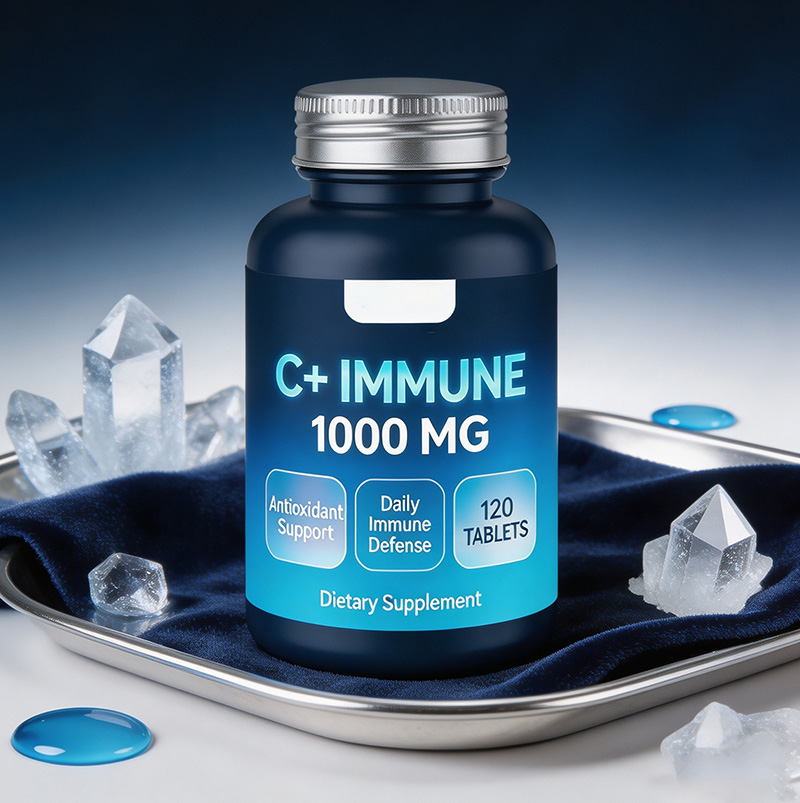
1. How effervescent tablets differ from ordinary pressed candy
An ordinary pressed candy uses a disintegrant that swells on contact with water and breaks the tablet apart. An effervescent tablet relies directly on acid-base neutralisation to generate gas and blow the tablet open, which changes the excipient system, the moisture specification and the packaging class. The critical difference is water. An ordinary tablet tolerates a certain moisture content; an effervescent tablet reacts slowly in storage the moment free water is present, showing up as a soft tablet, a swollen pack and a weak fizz. From raw material intake to cartoning, water is therefore the enemy to be designed out: dry the materials, dehumidify the room, and specify a high barrier pack. The second difference is taste, because neutralisation produces salts that bring a salty, alkaline finish, so the acid-base ratio and the sweetener system have to be tuned together rather than treating gas generation as the only goal.
2. Acid and base ratios: equivalents, not guesswork
Formulation starts with neutralisation equivalents. Common acids are citric, malic, fumaric and tartaric; common bases are sodium bicarbonate, sodium carbonate and potassium bicarbonate. Each has a different equivalent weight, and the acid and base gram-equivalents must balance if the reaction is to go to completion. In practice the acid is usually dosed slightly in excess, because excess base leaves an obvious alkaline, soapy finish while excess acid reads as fruit acidity and is far more acceptable to consumers. Citric acid reacts fast and fizzes hard but is the most hygroscopic and the likeliest to cause stickiness. Malic acid is softer in taste with moderate hygroscopicity. Fumaric acid barely absorbs moisture but dissolves slowly and drags the fizz out. A common factory route blends citric and malic acid to balance fizz speed against process stability. For the base, sodium bicarbonate is the most economical choice, while a low-sodium positioning pushes the formula towards potassium bicarbonate at noticeably higher cost.
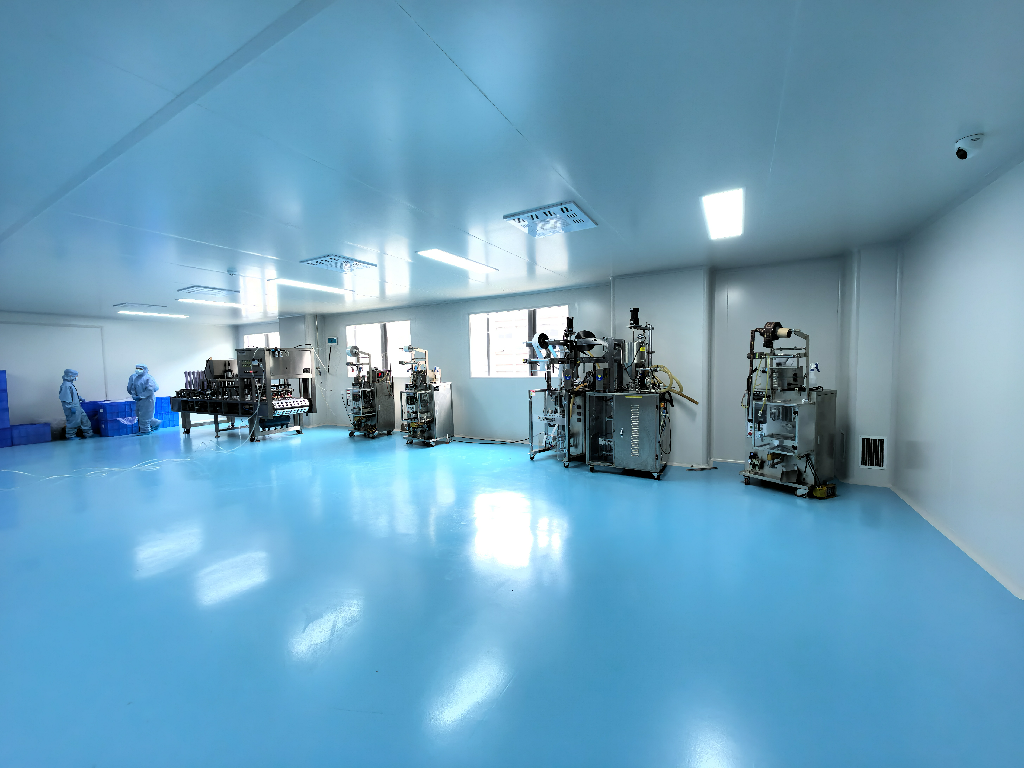
3. Why the acid and base must be granulated separately
Blend acid and base directly and press, and any trace of surface moisture sets off a slow reaction; friction heat during compression can accelerate it further. The industry standard is separate granulation: the acid is granulated with part of the filler using anhydrous ethanol or a low-moisture binder, the base is granulated separately with the remainder, and both granules are dried to a very low moisture content before a final blend with sweeteners and flavours. The granule structure keeps acid and base physically apart, so even the mild friction of compression will not trigger a reaction. Separate granulation also solves two other problems: granules flow and compress better than straight powders, giving more stable tablet weight, and once both streams are granulated to a similar particle size the tablets resist colour separation and stratification. The binder system must be anhydrous - granulating with water is equivalent to lighting the fuse.
4. Low-humidity suites and moisture pickup
Effervescent suites are run at a very low relative humidity, and dew point matters more than temperature. Citric acid, sodium bicarbonate and most sweeteners are hygroscopic, so at a high dew point the material cakes in the hopper, the tablets emerge with a tacky surface and an artificially high hardness, and within days of storage they soften. Three controls do most of the work. First, dehumidifiers and air conditioning are interlocked and driven by dew point rather than a plain humidity reading. Second, opened material is used within the same shift and sealed back into the warehouse rather than left in the production room overnight. Third, the tablet press hopper is swept with dry air and the dwell time between blending and compression is kept as short as possible. Effervescent products should also not share a line with other moisture-sensitive items, because residual water vapour during changeover is itself a hazard.
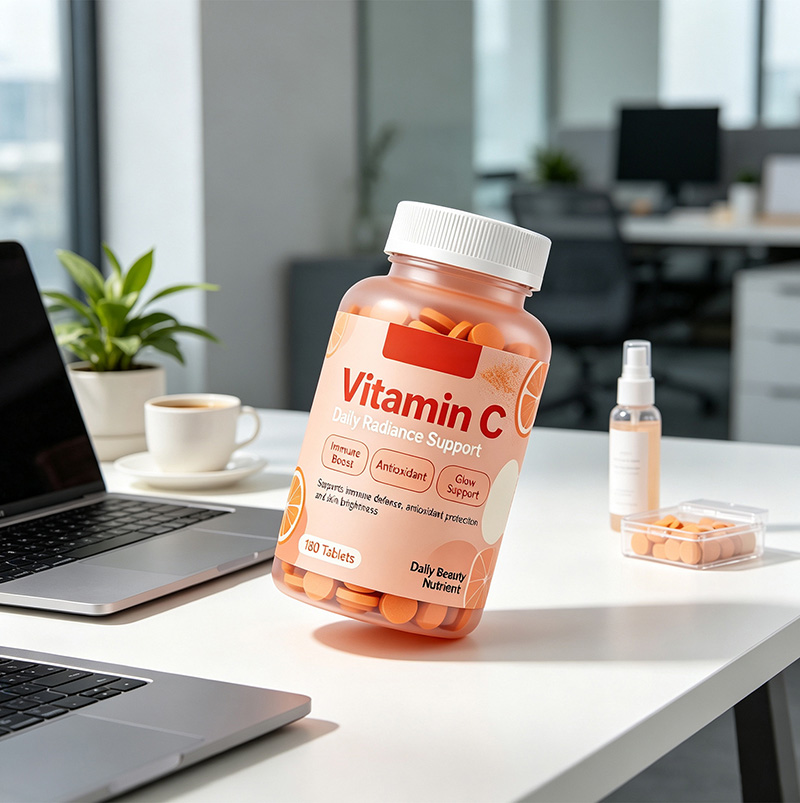
5. Packaging barriers and controlling gas generation in storage
Packaging for an effervescent tablet is not a container decision but part of the stability design. Aluminium blister, aluminium tube and plastic tubes with a desiccant compartment are the mainstream options, and the governing specification is a low water vapour transmission rate. Bottled product needs an adequate desiccant load, which rises with fill weight and shelf-life target, and the liner and cap torque matter just as much: under-torqued caps allow slow leakage as the pack vibrates in transit. Shelf-life studies should not stop at appearance. Under accelerated conditions, track three things together - tablet hardness, internal pack pressure and the fizz time in water. Some packs look perfect while the tablet already fizzes weakly, which means the reaction has begun. The packaging line also needs its own humidity control, since a long dwell before sealing lets the tablets start absorbing moisture inside the pack.
6. What to validate from trial run to commercial batch
Scale-up risk clusters in blending, compression and packaging. The first job at pilot scale is multi-point sampling for content uniformity and moisture distribution, because acid and base differ in density and a larger blender changes its dead zones, which shows up directly as inconsistent fizz. The second is establishing a stable compression window: effervescent tablets run at relatively low hardness with sensitive friability, so the window is narrower than for ordinary tablets and tablet weight, hardness and friability have to be tuned against three curves at once. The third is seal integrity testing, where vacuum leak detection is far more reliable than visual inspection. Written into the pilot release criteria, these three points are what give a commercial batch its stability - and what surfaces problems before a customer does.
Related Products
Glycerol diester coffee OEM OEM OEM OEM OEM meal replacement coffee MCT live broadcast same solid beverage source manufacturer | GLP-1 Semaglutide Satiety & Fat Blocker Tablets | Custom Pressed Candy OEM Manufacturing
About Guangzhou Mesen Health Biotechnology Co., Ltd
Guangzhou Mesen Health Biotechnology Co., Ltd is located in the Huashan Science and Technology Park, Huadu District, Guangzhou. The company has focused on OEM and ODM services for the big health industry for nearly 20 years, operating dedicated research, production, sales and management centres, and maintaining long-term strategic partnerships with well-known Chinese medicine colleges and research institutions. Capabilities span pressed candy, gummies, capsules, solid beverages, herbal teas, plant beverages, protein powders, dietary supplements and enzyme jelly - from formulation development through contract manufacturing. For details on minimum order quantities, sampling lead times and quotations, see our manufacturing advantages and product range, or contact us for a tailored proposal.
Further Reading