Lubricant Selection in Pressed Candy OEM: Magnesium Stearate and Ejection Control
In a pressed candy formulation the lubricant usually accounts for a fraction of a percent, yet it generates trouble out of all proportion to that share. Hardness that never reaches target, disintegration that keeps lengthening, speckled or dull surfaces, difficult ejection and even damaged punch tips can all trace back to it. In pressed candy OEM, a lubricant is neither an optional additive nor a protective agent that is safer in larger amounts. It is a boundary condition that has to be controlled on three axes at once: type, level and blending time. This article sets out, from the perspective of day-to-day process adjustment, how lubricants work, how the common grades differ, what level and mixing time do to tablet quality, and how to diagnose sticking and ejection problems.
1. What a lubricant actually does
The function splits into three distinct mechanisms. The first is reducing friction between the granule and the die wall, which lowers the ejection force; when this is inadequate, ejection becomes hard, punch edges pick up material and the tablet band shows vertical scoring. The second is modifying bonding between particles, because the lubricant forms a thin film over granule surfaces that lets them slide past one another, which improves fill uniformity but weakens the bonds that hold the tablet together. The third is anti-adherence, reducing the tendency of material to stick to the punch face, which matters most for formulas containing sugars, botanical extracts or hygroscopic components. Once these three are separated, it becomes clear why a lubricant is both necessary and strictly limited: the first two mechanisms work against each other, so raising the level buys smoother ejection at the cost of hardness and disintegration.
2. How the common grades differ
Magnesium stearate is the default choice because it is efficient at low levels and inexpensive, but it carries two clear drawbacks. It is strongly hydrophobic, so an excessive level or over-blending lengthens disintegration noticeably, and the magnesium ion raises compatibility questions in acidic formulas or with certain actives. Sodium stearyl fumarate is the usual alternative: less hydrophobic, gentler on disintegration and dissolution, better tolerated across pH ranges, and correspondingly more expensive. Hydrogenated vegetable oils lubricate mildly and durably with little effect on disintegration, though their melting behaviour and storage temperature need attention since hot summer conditions can soften them and cause uneven distribution. Talc and colloidal silica are mainly glidants that improve flow rather than carrying the lubricating load, while polyethylene glycols appear in specific water-soluble systems. Selection is not about choosing the most expensive grade but balancing formula acidity, disintegration targets, cost and supply stability.
3. Why the level has to be capped
Formulas exhibit clear lubricant sensitivity, meaning a small change in level can move hardness and disintegration far more than expected. A typical pattern: raising the level from half a percent to one percent cuts ejection force visibly, yet hardness falls by ten to twenty percent and disintegration stretches from around fifteen minutes to over thirty, and it can keep lengthening through the later part of shelf life. The reason is that the hydrophobic film delays water ingress, which is the first step of disintegration, so everything downstream slows with it. The practical approach is to run a level ladder at laboratory scale, usually three or four points, measuring hardness, friability, disintegration and appearance at each, then take the lowest level that gives reliable ejection rather than a comfortable-looking margin. That minimum is the value locked in for commercial production.
4. The effect of blending time and shear
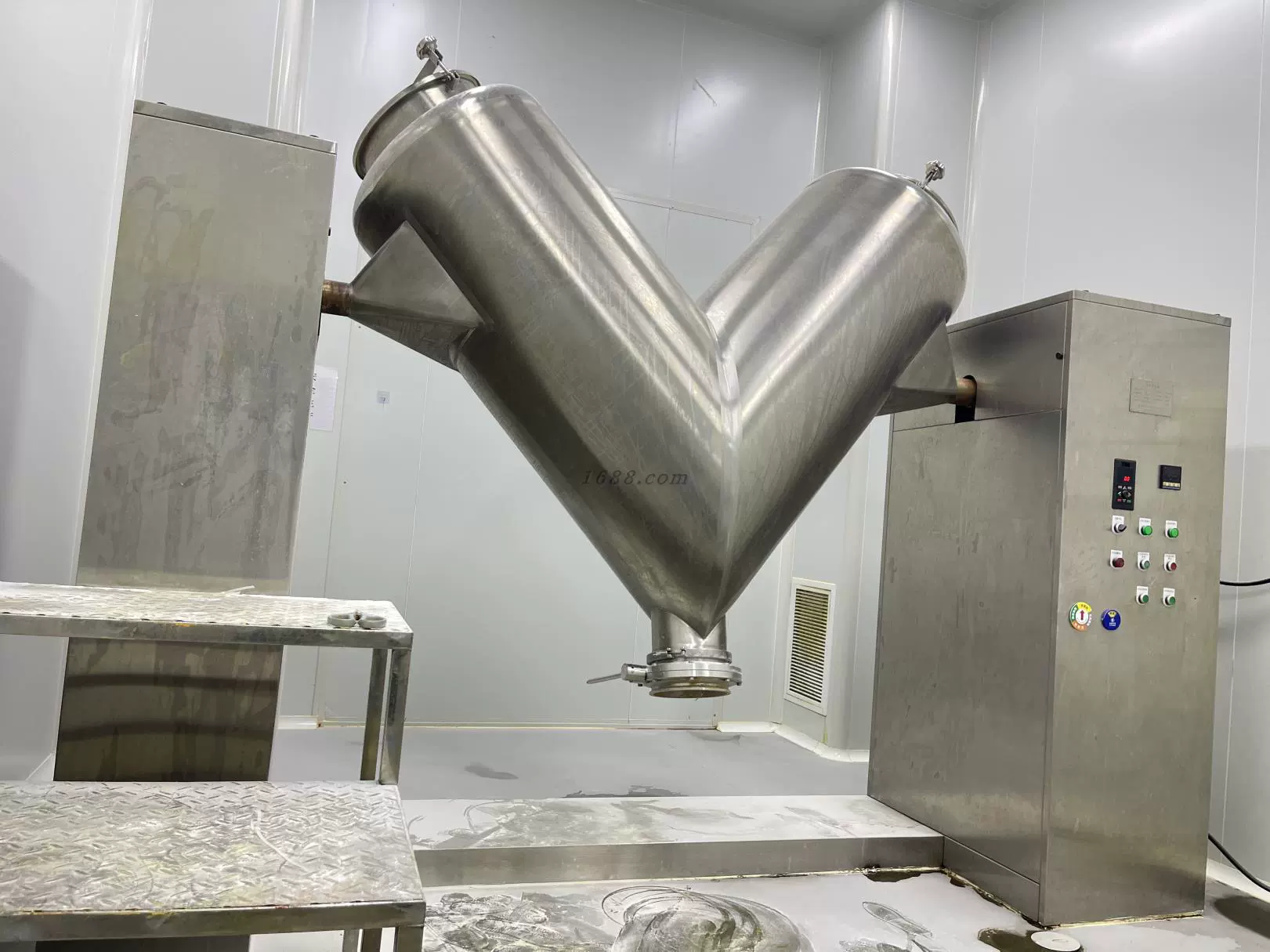
Many teams watch the level and overlook blending time, which causes the more elusive problems. During blending the lubricant is progressively broken up and spread over granule surfaces; the more complete that coating, the stronger the effect per unit of level. With excessive time or shear, the film becomes continuous, so at the same level the tablets are softer and slower to disintegrate, and surfaces may develop a waxy sheen or mottling. Standard practice is therefore to add lubricant last, blend at low speed for a short period, typically a few minutes, with the exact figure established at laboratory scale and written into the process instruction. Commercial batches must then use the same blender model, fill ratio and speed, because differences in shear history between machines change the actual degree of coating.
5. Recognising too little versus too much
Under-lubrication shows itself fairly directly: elevated ejection current, audible punch drag, vertical scoring or burrs on the tablet band, material gradually building on punch faces so surfaces get duller with each revolution, and in severe cases damage to the punch tips. Over-lubrication appears as low or steadily falling hardness, worse friability, clearly longer disintegration, oily spots or a waxy sheen, and more fines. One frequently misread symptom is pitting or small dents on the tablet face, which gets blamed on lubrication when the real cause is excess fines, incorrect moisture content or a poorly adjusted feeder. When diagnosing, hold material condition and machine settings constant and change only the lubrication variables, otherwise the conclusion will not hold up.
6. From trial runs to commercial batches
A reliable sequence is to screen grade and level in the laboratory to identify a candidate range, then run a short trial on the press to observe ejection force, surface appearance and hardness, then confirm with one or two pilot batches focused on how scale-up changes blending, since the shear history of a large blender differs from a small one. Finally, lock the grade, level, addition order, blender speed and time into the process instruction and batch record. Two routine checks then keep it stable: measure hardness and disintegration on every batch to catch drift, and periodically review the particle size and specific surface area of incoming lubricant, because lot-to-lot variation from the supplier changes lubricating efficiency directly. With these fixed, lubrication stops being a recurring source of firefighting.
Related Products
Glycerol diester coffee OEM OEM OEM OEM OEM meal replacement coffee MCT live broadcast same solid beverage source manufacturer | GLP-1 Semaglutide Satiety & Fat Blocker Tablets | Custom Pressed Candy OEM Manufacturing
About Guangzhou Mesen Health Biotechnology Co., Ltd
Guangzhou Mesen Health Biotechnology Co., Ltd is located in the Huashan Science and Technology Park, Huadu District, Guangzhou. The company has focused on OEM and ODM services for the big health industry for nearly 20 years, operating dedicated research, production, sales and management centres, and maintaining long-term strategic partnerships with well-known Chinese medicine colleges and research institutions. Capabilities span pressed candy, gummies, capsules, solid beverages, herbal teas, plant beverages, protein powders, dietary supplements and enzyme jelly - from formulation development through contract manufacturing. For details on minimum order quantities, sampling lead times and quotations, see our manufacturing advantages and product range, or contact us for a tailored proposal.
Further Reading