
Standardising Actives in Oral Liquid OEM: Extraction Ratios, Markers and Fill Volume
How much active does one oral liquid vial actually contain? The question sounds simple but it pulls on formulation, process, cost and labelling all at once. Some products declare input quantity of raw material, others declare a marker compound, others declare a concentration ratio against crude herb, and the resulting numbers can differ widely while all being expressed in a similar sentence on the pack. A brand that does not know which basis it bought will find itself caught between label copy, marketing language and cost long after production starts. This article explains, from the manufacturing side, the standardisation approaches used in oral liquid OEM, how a marker is chosen, the controls that matter in extraction and concentration, how fill volume relates to daily intake, and how content is assured through shelf life. These belong at project definition, not at launch.
1. How the standardisation bases differ
Three approaches are common. Declaring input quantity, such as milligrams of a named extract per vial, is intuitive but says nothing about the quality of that extract, since five hundred milligrams from two suppliers can differ several-fold in marker content. Declaring a concentration ratio, such as the equivalent grams of crude material, is easy for consumers to grasp but heavily dependent on raw material quality and extraction practice, and a higher ratio does not necessarily mean more active. Declaring a marker compound, such as milligrams of a named constituent per vial, is the most precise and the easiest to test and verify, but requires the material to have an identifiable, measurable marker. None is universally better, but the basis has to be settled at project start because it determines both the raw material specification and the testing cost.
2. Choosing a marker compound
Where marker standardisation is used, the choice of marker is decisive. A good marker relates to the product's positioning, has an established and stable test method, occurs at reasonably consistent levels in the material so purchasing can be controlled, survives the process without severe loss, and remains measurable through shelf life. Some botanicals contain several actives, in which case a group figure such as total flavonoids, total saponins or total polysaccharides can be used, or a single characteristic compound. Group markers are tolerant of raw material variation but less specific; single markers are specific but more exposed to batch variation. A combination is common, controlling both a group total and a characteristic compound. Either way, the method and acceptance range belong in the material specification.
3. Controlling extraction and concentration
Extraction transfers target compounds from the material into solvent, and the parameters determine both yield and the profile obtained. Solvent type and concentration, solid-to-liquid ratio, temperature, duration and number of passes all matter. Higher temperature generally improves solubility but costs heat-sensitive actives, so the window follows the thermal stability of the target. More extraction passes raise yield but also co-extract impurities and add downstream load. For concentration, vacuum evaporation is efficient but still thermal, while membrane concentration runs cool and suits heat-sensitive compounds at higher capital and running cost. The concentration end point is usually controlled by relative density or soluble solids, and that figure has to be compatible with downstream solubility, otherwise sedimentation appears during storage.
4. Relating fill volume to daily intake
Fill volume is not an arbitrary choice; it follows from the recommended daily intake and the dosing regimen. The logic runs in one direction: establish the daily target first, then the number of doses per day, then the volume per unit. If the daily target is a given number of milligrams taken twice daily, each vial is standardised to half. Volume also has to respect filling accuracy and palatability, because a very small fill makes the relative filling error large while a very large one hurts the experience. Process loss and any overage must be built into formulation at the design stage rather than corrected by adding more material after a failing result. Pack sizes should correspond to a course or dosing period, so a box does not leave the consumer unable to finish a cycle.
5. Assuring content through shelf life
A declared value on the label must hold for the whole shelf life, not only at release. Actives decline during storage through oxidation, hydrolysis, light and temperature, at a rate governed by the formulation, the pack barrier and storage conditions. Practice follows three lines: understand the decay trend through pre-formulation stability work and set a justified overage; choose an appropriate pack, since amber glass protects light-sensitive compounds better than clear and closure integrity affects oxidation rate; and verify through stability studies under both accelerated and real-time conditions, confirming that content at the end of shelf life still meets the declaration. Overage needs restraint, since an excessive margin raises cost and for some compounds raises safety questions as well.
6. Practical guidance for brand owners
Brands should engage early at several points. First, state the standardisation basis when requesting a quotation, whether input quantity, concentration ratio or marker, because the price differs substantially and comparison is meaningless without it. Second, ask for the raw material specification and acceptance criteria, particularly under marker standardisation, where the acceptable range in the material must be explicit or incoming lots will fail repeatedly. Third, agree the test method, its source and the laboratory, so the declared figure can be reproduced. Fourth, set a realistic target rather than chasing a high number, since each step up in content raises material cost and process difficulty. Fifth, require stability work and obtain at least preliminary accelerated data before commercial production confirms the declared value can be held. This extends the project timeline and avoids far larger rework later.
Related Products
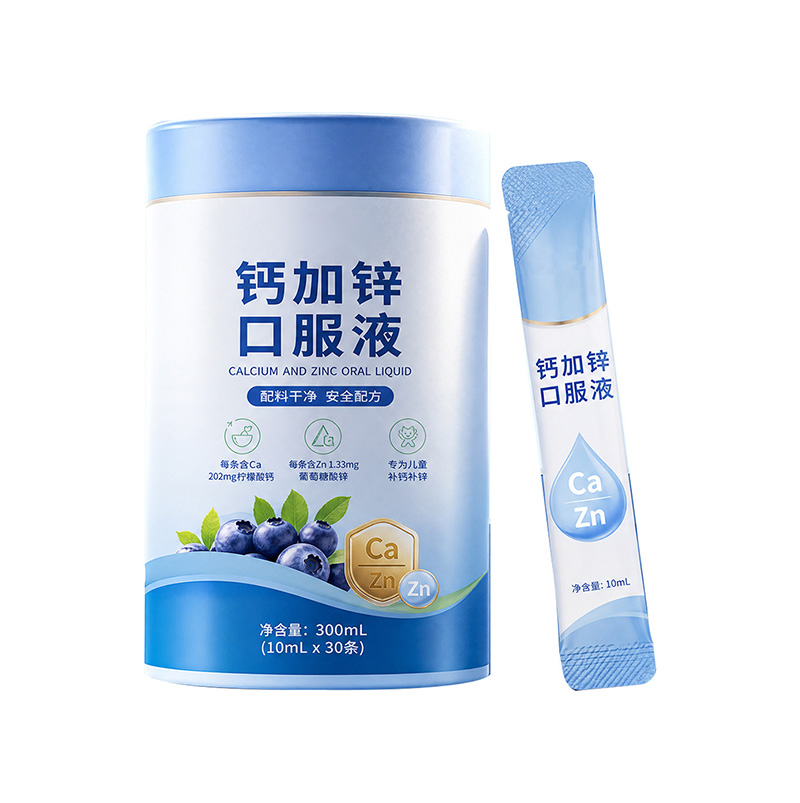
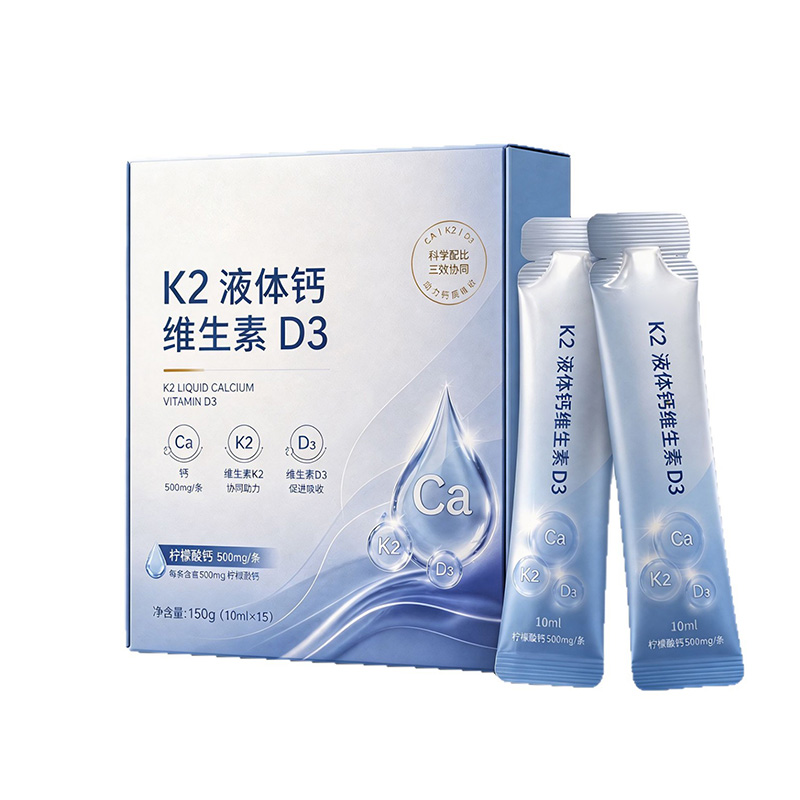
Calcium + Zinc Oral Liquid Blueberry Flavor | Zinc Gluconate Liquid Calcium Supplement for Kids OEM | Kids Liquid Calcium with High-Potency Vitamin K2 & D3 | Calcium Zinc Oral Liquid for Teens OEM
About Guangzhou Mesen Health Biotechnology Co., Ltd
Guangzhou Mesen Health Biotechnology Co., Ltd is located in the Huashan Science and Technology Park, Huadu District, Guangzhou. The company has focused on OEM and ODM services for the big health industry for nearly 20 years, operating dedicated research, production, sales and management centres, and maintaining long-term strategic partnerships with well-known Chinese medicine colleges and research institutions. Capabilities span pressed candy, gummies, capsules, solid beverages, herbal teas, plant beverages, protein powders, dietary supplements and enzyme jelly - from formulation development through contract manufacturing. For details on minimum order quantities, sampling lead times and quotations, see our manufacturing advantages and product range, or contact us for a tailored proposal.
Further Reading




