
Sterilising Oral Liquid OEM: F0 Value, Terminal Sterilisation and Aseptic Filling
Whether an oral liquid needs sterilising, and how, must be answered before the formulation is frozen. The decision determines which packaging can be used, whether probiotics and heat-sensitive actives are viable, how long a shelf life is achievable, and how much the line costs. Too often the question is raised after the formula is fixed, and a brand discovers its heat-sensitive ingredient cannot survive terminal sterilisation, or its pack format is incompatible with aseptic filling, and the work starts again. This article covers, from production, what the F0 value means and how it is set, where terminal sterilisation damages product, what aseptic filling demands, and how the routes compare on cost and compliance. In our oral liquid supplement OEM work, sterilisation route is an input to formulation rather than a later addition.
1. What the F0 value actually expresses
F0 expresses moist heat sterilisation intensity, converting the temperature profile of the whole cycle into an equivalent time at 121 degrees Celsius. Conversion matters because heating and cooling phases contribute lethality, and ignoring them understates the real dose. Higher F0 gives greater assurance of kill but more damage to heat-sensitive material. Setting it starts from the product bioburden and its heat resistance: measure the initial microbial load and the D-value of the resistant organisms present, then calculate the intensity needed for the required sterility assurance level, and add a safety margin. That margin should not be generous, because over-sterilisation is a leading cause of colour shift, sediment formation and assay loss in oral liquids.
2. What terminal sterilisation costs you
Terminal sterilisation heats the sealed product as a whole, offering reliable lethality, lower demands on the filling environment and a clear validation logic. The costs come in three forms. Heat-sensitive actives degrade, with most vitamins, probiotics and some plant extracts losing significant potency over a full cycle, which pushes towards overage, bringing both cost and label claim complications. Packaging is constrained, since glass must withstand thermal shock and plastic bottles or stick packs need material rated for the sterilising temperature. Appearance and taste shift too, as heat accelerates Maillard browning. Terminal sterilisation therefore suits stable formulations with robust ingredients.
3. What aseptic filling requires
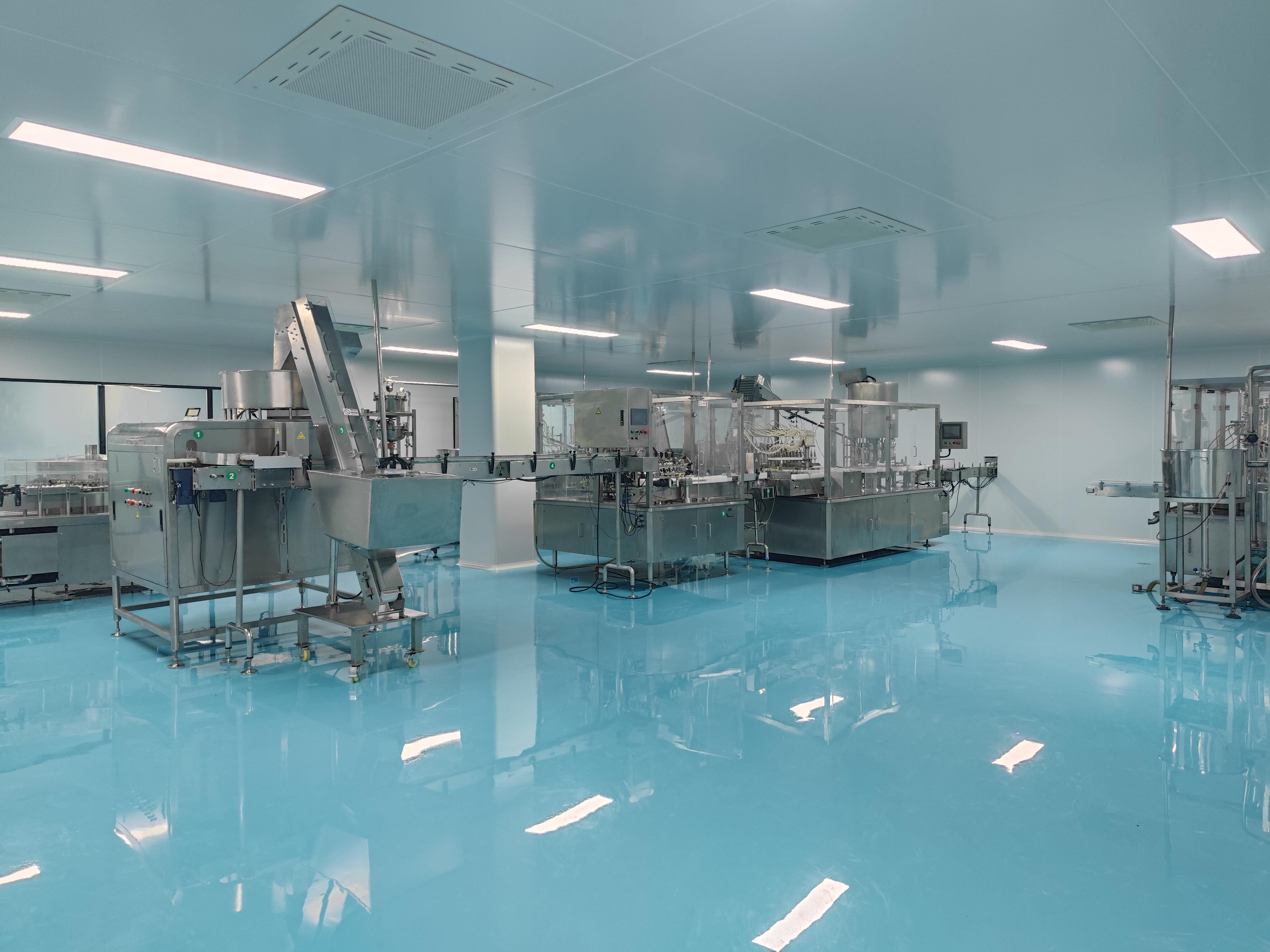
Aseptic filling sterilises the product separately and fills it into pre-sterilised containers within a controlled environment, giving short heat exposure, better retention of sensitive actives and far freer packaging choice. The demands are correspondingly greater. On the product side, a reliable sterilisation step, usually ultra-high temperature treatment with sterile holding tanks and transfer lines. On the environment side, a filling area at the required cleanliness grade with HEPA supply, pressure differentials and disciplined gowning. On the container side, washing and sterilising bottles or using pre-sterilised packaging. The whole system needs media fill validation proving it holds sterility under worst-case conditions, and routine operation requires environmental monitoring, differential pressure records and filter integrity testing, all of which cost more to run than terminal sterilisation.
4. How the two cost structures differ
Unit processing cost alone is misleading. Terminal sterilisation needs relatively modest equipment, concentrates energy use in the steriliser, and restricts packaging to heat-tolerant materials. Aseptic filling carries higher capital, expensive cleanroom construction and operation, and significant labour for validation and monitoring, but allows cheaper conventional plastic bottles or stick packs and avoids heavy overage of sensitive actives. In aggregate, high-volume products with stable formulations usually work out cheaper terminally sterilised, while small-batch, high-value products containing sensitive ingredients favour aseptic. At quotation stage a brand should ask for both routes to be costed rather than accepting a single figure.
5. Sterility assurance is not sterility testing
A common misconception treats finished product sterility testing as the guarantee. That test is a sample with limited statistical power, and a low contamination rate can easily be missed, so a passing result does not prove the batch is sterile. Assurance comes instead from three things: a properly designed sterilisation process, validated equipment and procedures, and continuing process control. That is why validation carries such weight, including heat distribution and heat penetration studies, integrity testing of sterilising filters, media fill simulation and cleanroom environmental monitoring. At audit, a brand should focus on those validation reports and routine monitoring records rather than on certificates of analysis alone.
6. Secondary risk in shelf life and transport
Even with solid assurance at release, microbial problems can appear during shelf life, usually because seal integrity was inadequate or the packaging material was flawed. Seal integrity testing therefore belongs inside shelf-life validation, sampling at intervals to confirm sealing performance does not decline with time and temperature. Transport carries similar risk, since heat and vibration can loosen closures or create micro-cracks. A transit simulation before launch, reproducing realistic temperature, humidity and stacking vibration followed by seal and microbial testing, is worth the effort. For export, long sea freight in high heat and humidity deserves particular attention, with packaging adjusted or additional protection added where the data calls for it.
Related Products
Calcium + Zinc Oral Liquid Blueberry Flavor | Zinc Gluconate Liquid Calcium Supplement for Kids OEM | Kids Liquid Calcium with High-Potency Vitamin K2 & D3 | Calcium Zinc Oral Liquid for Teens OEM
About Guangzhou Mesen Health Biotechnology Co., Ltd
Guangzhou Mesen Health Biotechnology Co., Ltd is located in the Huashan Science and Technology Park, Huadu District, Guangzhou. The company has focused on OEM and ODM services for the big health industry for nearly 20 years, operating dedicated research, production, sales and management centres, and maintaining long-term strategic partnerships with well-known Chinese medicine colleges and research institutions. Capabilities span pressed candy, gummies, capsules, solid beverages, herbal teas, plant beverages, protein powders, dietary supplements and enzyme jelly - from formulation development through contract manufacturing. For details on minimum order quantities, sampling lead times and quotations, see our manufacturing advantages and product range, or contact us for a tailored proposal.
Further Reading




