
Powder Flavour Systems in Solid Beverage OEM: Encapsulation, Carriers and Aroma Retention
One of the hardest complaints to handle in solid beverages is the one where every physicochemical and microbiological result is in specification, the drink still looks right, and the consumer says it tastes weaker than before. In most cases the recipe is not wrong; the aroma has simply left during storage. Aroma compounds are small, volatile and easily oxidised, and a powder presents an enormous surface area, which amounts to laying the flavouring out and waiting for it to escape. Fixing it means looking at three linked stages: which form of flavouring to use, how to immobilise it, and what pack and storage conditions slow the loss. In our solid beverage OEM work, retention is verified before a formulation is signed off rather than after complaints arrive.
1. Liquid versus powder flavourings
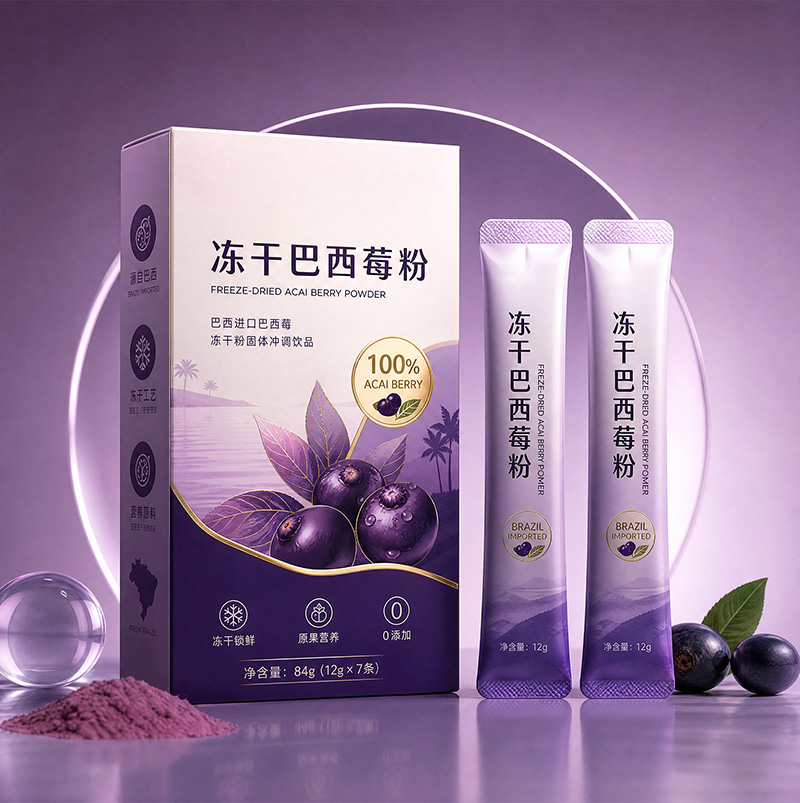
Liquid flavourings offer high aroma intensity, low cost and a wide choice, but adding them straight to a dry blend brings two problems. Dispersion is uneven, because a small volume of liquid distributed through a large mass of powder produces local caking and lot-to-lot flavour differences, and volatile components sit exposed on the powder surface where they are lost quickly. Powdered flavourings disperse or encapsulate the flavour base in a solid carrier, giving good flow, easy blending and better stability, at the cost of lower aroma intensity per unit, higher cost and the loss of some top notes during processing. In practice the answer is often a combination: a powder carries the body of the profile through shelf life while a small liquid addition sprayed late in the process restores top notes. Which way to go depends on positioning, shelf-life target and cost structure, and there is no universal answer.
2. Encapsulation and carriers
Encapsulation puts a wall material around the flavour droplet to reduce volatilisation and oxygen contact. The mainstream route is emulsification followed by spray drying, with wall materials such as maltodextrin, gum arabic, modified starch and starch sodium octenyl succinate, each trading off film-forming ability, emulsifying power, oxygen barrier and cost. Inlet temperature, atomisation pressure and solids content of the spray dryer set particle size and encapsulation efficiency, and too high a temperature strips out exactly the most volatile top notes. Spray granulation, complex coacervation and cyclodextrin inclusion are alternatives, the last offering selective protection for particular small molecules. Encapsulation quality is judged on two numbers: surface oil and encapsulation efficiency. High surface oil means aroma sitting exposed, which is a shelf-life risk.
3. Release behaviour and how it drinks
Retention and release pull against each other: the tighter the encapsulation, the more stable the shelf life and the slower the release, which reads as weak aroma on the palate. A powdered flavouring therefore cannot be judged by smelling the dry powder; it has to be assessed under real preparation conditions, since water temperature, dilution, whether it is stirred and how long it stands all change the sensory outcome. The usual approach sets a standard preparation method and a scoring sheet, with a fixed panel rating aroma intensity, character, off-notes and overall harmony. Products needing fast release can use more soluble wall materials and finer particle sizes; products prioritising shelf life can use stronger encapsulation with a higher dose. This balance is best settled in development with two comparison samples backed by accelerated data.
4. Shelf-life fade and pack barrier
Aroma is lost through three routes: volatilisation, oxidative degradation and sorption transfer. The first two are addressed by encapsulation and antioxidants, and the third is routinely overlooked. Aroma is absorbed by packaging materials, particularly some plastic liners and recycled paper grades, which shows up as a pack that smells strongly while the contents smell flat. Pack selection has to consider water vapour transmission, oxygen transmission and aroma barrier together; foil laminates beat metallised and plain plastic structures on all three, at higher cost and with poorer recyclability. Storage temperature is the other variable, because heat accelerates both volatilisation and oxidation, so transport and warehouse temperature controls should be aligned with how the accelerated study was designed rather than treated separately.
5. Designing the retention study
Retention has to be demonstrated with data. The common approach stores samples under elevated temperature and humidity, pulls them at set points and compares them against a low-temperature retain using triangle testing or scoring, supported by headspace analysis or peroxide value as instrumental markers. Two points matter in the design. Accelerated conditions must stay within what the pack and product can tolerate, because beyond that the degradation mechanism changes and the result cannot be extrapolated. And a real-time retain should run in parallel, with the accelerated data indicating the trend and the real-time data correcting it. Sensory work needs a fixed panel and a reference standard, ideally retaining the initial batch as a benchmark, because six months later a panellist's memory of the original taste is no longer reliable.
6. Losses that happen before shelf life
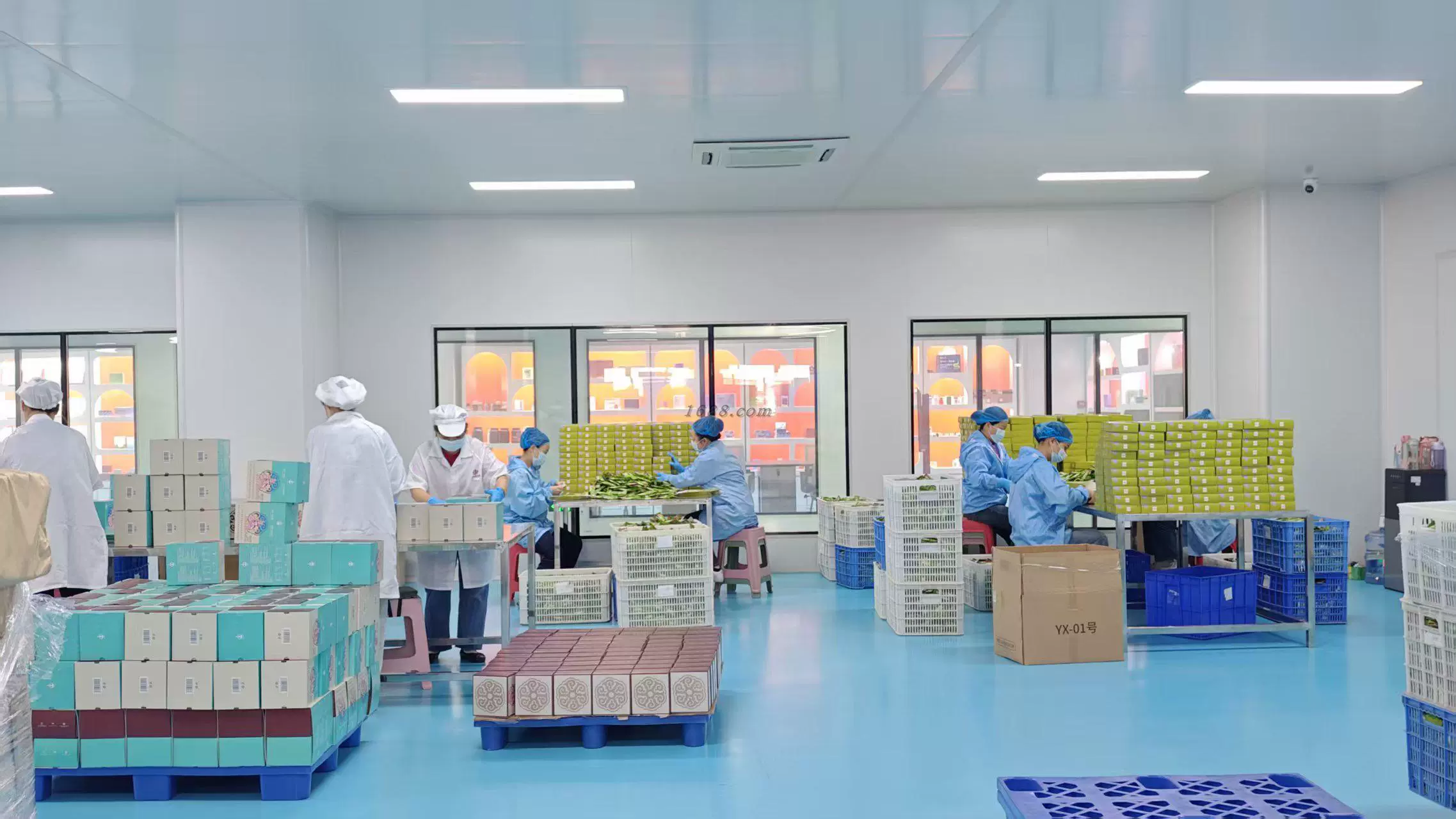
Some loss occurs in the factory rather than in the warehouse. Order of addition matters: if the flavouring goes in before granulation or any high-temperature step, the most volatile fractions leave during drying, so it is usually added late in blending or after granulation, with mixing time and temperature controlled. Local overheating in the blender, holding material in open containers after discharge, and excessive sealing temperature at packing all add further loss. Scheduling matters too, and blended unpacked material should not be held overnight. For a brand assessing a plant, two details are worth noticing: whether flavouring has its own weighing and addition record, and whether there is a defined hold-time limit for intermediate material. Both say more about real capability than a brochure does.
Related Products
White Kidney Bean Black Coffee Latte Powder | Instant Keto Enzyme Coffee Solid Beverage OEM Private Label | Protein Berry Meal Replacement Shake Powder | Satiety Smoothie Solid Beverage Custom OEM
About Guangzhou Mesen Health Biotechnology Co., Ltd
Guangzhou Mesen Health Biotechnology Co., Ltd is located in the Huashan Science and Technology Park, Huadu District, Guangzhou. The company has focused on OEM and ODM services for the big health industry for nearly 20 years, operating dedicated research, production, sales and management centres, and maintaining long-term strategic partnerships with well-known Chinese medicine colleges and research institutions. Capabilities span pressed candy, gummies, capsules, solid beverages, herbal teas, plant beverages, protein powders, dietary supplements and enzyme jelly - from formulation development through contract manufacturing. For details on minimum order quantities, sampling lead times and quotations, see our manufacturing advantages and product range, or contact us for a tailored proposal.
Further Reading




