
Texture Design in Enzyme Jelly OEM: Gel Strength, Mouthfeel and Syneresis Control
Repeat purchase on enzyme jelly is largely decided by texture. Two problems dominate production: batches that vary between bouncy and tough, and a layer of water that appears at the bottom of the cup or inside the film after a week or two, which reads to consumers as instability or spoilage. They look different but both trace back to how the gel network forms and holds. Poor texture is rarely a matter of too little gum; it is more often a mismatch between gum selection, blend ratio, system pH and process temperature. On enzyme jelly programmes we treat texture as the primary specification at formulation sign-off, confirmed by instrument and panel together rather than by impression at a tasting bench.

1. What texture actually comprises
Texture is a set of mechanical behaviours, not one attribute. Texture profile analysis, which compresses the sample twice to simulate chewing, produces the standard set: hardness, the peak force on the first compression, corresponding to the initial bite; springiness, the ability to recover, corresponding to bounce; chewiness, the energy needed to reach a swallowable state; cohesiveness, how tightly the internal structure holds; and resilience, which relates to the immediate recovery in the mouth. Combinations define the experience: high hardness with low springiness reads as tough and dry, low hardness with high cohesiveness as soft and glutinous. Development works better when the target mouthfeel is expressed as parameter ranges first and the system is then adjusted to reach them, rather than asking for slightly softer and hoping.
2. Three variables in the gel system
Blend composition is the first. Single gums each have a weakness: gelatin gives excellent elasticity but melts low and softens in summer; carrageenan has high gel strength but tends to synerese; pectin is clean but has a narrow setting window; konjac holds water well but lacks springiness alone. Blends exploit synergy, with carrageenan plus konjac markedly improving elasticity and water holding, and gelatin plus pectin combining bounce with a clean finish. Total gum level is the second variable, setting hardness directly, though not linearly: past a certain point the product moves from bouncy to rigid. System conditions are the third, since pH governs how pectin and carrageenan set, soluble solids influence network density, and calcium and potassium ions strongly change the gel strength of carrageenan and alginate, so they have to be controlled deliberately.
3. Where syneresis comes from
Syneresis is the gel network continuing to contract after it forms and squeezing out the water it holds. The causes are fairly consistent. A network that is too strong, or a gum level that is too high, contracts harder than it can retain. Excess acidity, or acid added at the wrong moment, triggers localised over-reaction and an uneven network. An unbalanced blend lacking a strong water-holding component gives the network nothing to hold water with. Temperature cycling during storage disrupts the structure, and freeze-thaw is the worst case. Salts and ions from raw materials interfere with setting. Countermeasures follow directly: introduce a water-holding component through blending, control acid addition rate and timing, moderate total gum level, stabilise cold chain and warehousing, and pre-treat or sequester where calcium and magnesium loads are high. Centrifugal syneresis rate is the usual way to quantify it and compare formulations.

4. How process parameters reshape texture
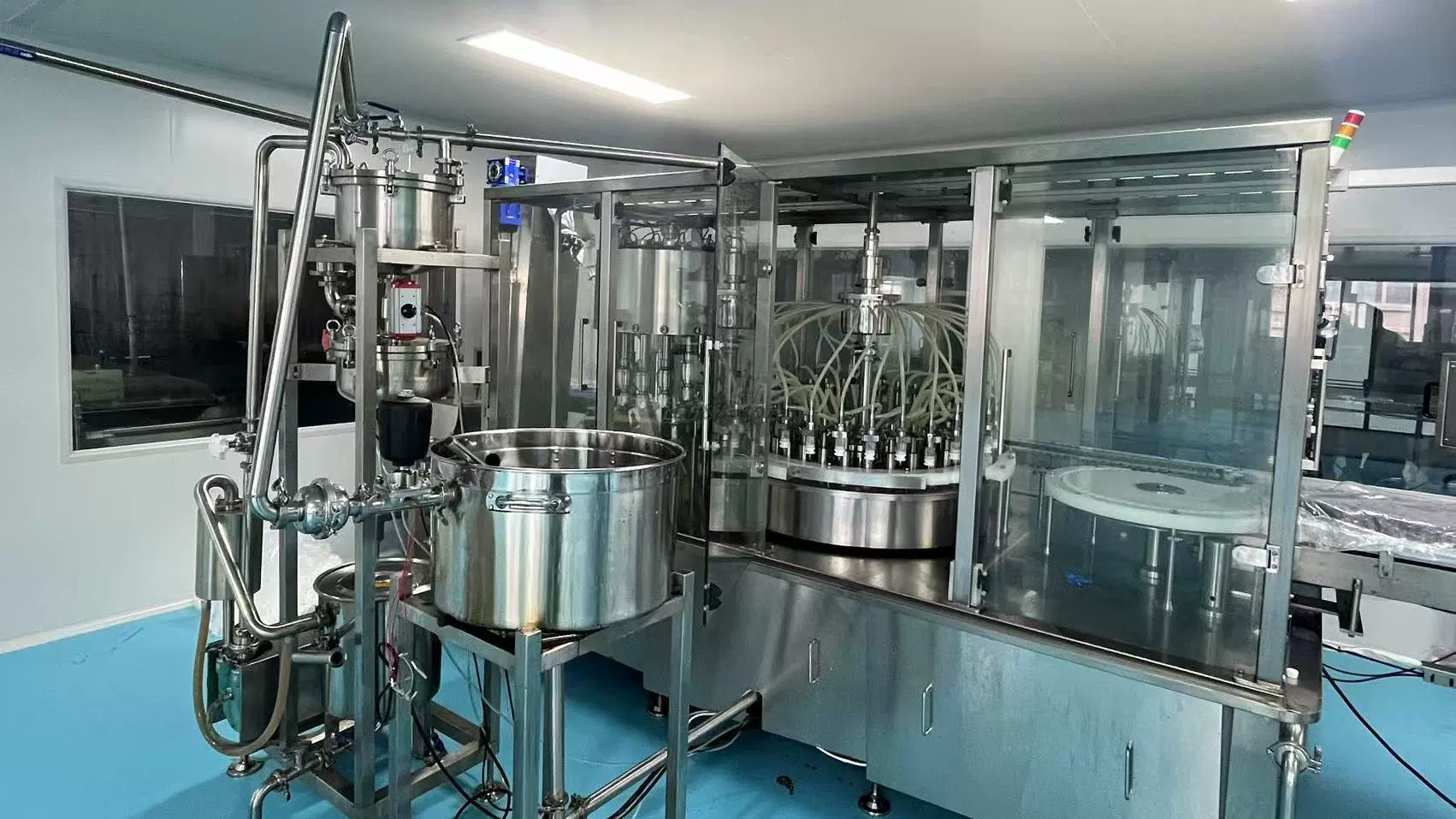
The same formula behaves differently under different process conditions. Cooking temperature and time determine how completely the gum dissolves and disperses: under-dissolution leaves weak spots and an uneven network, while excessive heat or hold degrades the gum and lowers gel strength. Acid addition timing is the most sensitive operation: most systems require cooling to a defined temperature before acid is added, because adding it hot accelerates hydrolysis and causes local rapid setting, giving graininess and syneresis. Fill temperature sets where gelation begins, and too high a fill extends cooling and increases heat damage to colour and flavour. The cooling curve governs network formation rate, with fast cooling giving a finer network and slow cooling a coarser one. Mechanical disturbance during cutting and packing can also damage a set network, so vibration after forming is kept to a minimum.
5. Living with raw material and seasonal variation
Natural hydrocolloids vary by lot and by season, and that is a permanent quality challenge. Gelatin bloom strength, pectin degree of esterification and gel grade, and carrageenan gel strength all shift between deliveries, so goods-in testing should include these functional measures rather than routine chemistry alone. A workable compensation routine is to run a small trial on each new lot, determine the gum level needed to hit the target texture, and adjust make-up quantities against the standard formula, while building up a documented relationship between raw material functional values and final texture parameters so experience gradually becomes rules. Summer heat hits gelatin systems hardest and is compensated through higher gum levels, blend changes or stronger cold chain. Process water hardness and ion content deserve monitoring too, since water variation is behind a surprising number of unexplained texture drifts.
6. Evaluation and reference standards
Texture control has to become routine. Instrumentally, every batch is measured for hardness, springiness and chewiness against the defined target range, with syneresis checked periodically by centrifuge or standing observation. Sensorially, a fixed panel scores defined attributes to build a flavour and mouthfeel profile that corroborates the instrument. A reference standard programme matters as much: retain material from a confirmed batch as the benchmark, and test the standard alongside the sample in every session to cancel out environmental differences. Shelf-life tracking completes it, measuring texture and syneresis at intervals to see whether the product drifts during its declared life. Once this is in place, texture stops being a matter of feel and becomes a managed number.
Related Products
Extra Strength Orange Enzyme Jelly with Prebiotics | Fruit-Flavored Cup Jelly Private Label OEM Manufacturer | Collagen Fruit & Vegetable Enzyme Jelly with Prebiotics | Custom Extra Strength Jelly OEM Factory
About Guangzhou Mesen Health Biotechnology Co., Ltd
Guangzhou Mesen Health Biotechnology Co., Ltd is located in the Huashan Science and Technology Park, Huadu District, Guangzhou. The company has focused on OEM and ODM services for the big health industry for nearly 20 years, operating dedicated research, production, sales and management centres, and maintaining long-term strategic partnerships with well-known Chinese medicine colleges and research institutions. Capabilities span pressed candy, gummies, capsules, solid beverages, herbal teas, plant beverages, protein powders, dietary supplements and enzyme jelly - from formulation development through contract manufacturing. For details on minimum order quantities, sampling lead times and quotations, see our manufacturing advantages and product range, or contact us for a tailored proposal.
Further Reading


