Capsule OEM Compliance: Shell Standards, Labelling Rules and Filing Requirements for Brands
Capsules are among the most common formats in the health category, and their compliance complexity is routinely underestimated. The reason is simple: a capsule product sits under two sets of rules. The fill has to satisfy the ingredient and formulation requirements for food or supplement products, while the shell has to satisfy its own standard as a food additive or excipient. And the label has to cover the fill's full ingredient list as well as the shell, its colourants, and any permitted function statement. This article works through the shell, the fill, the label and the filing.
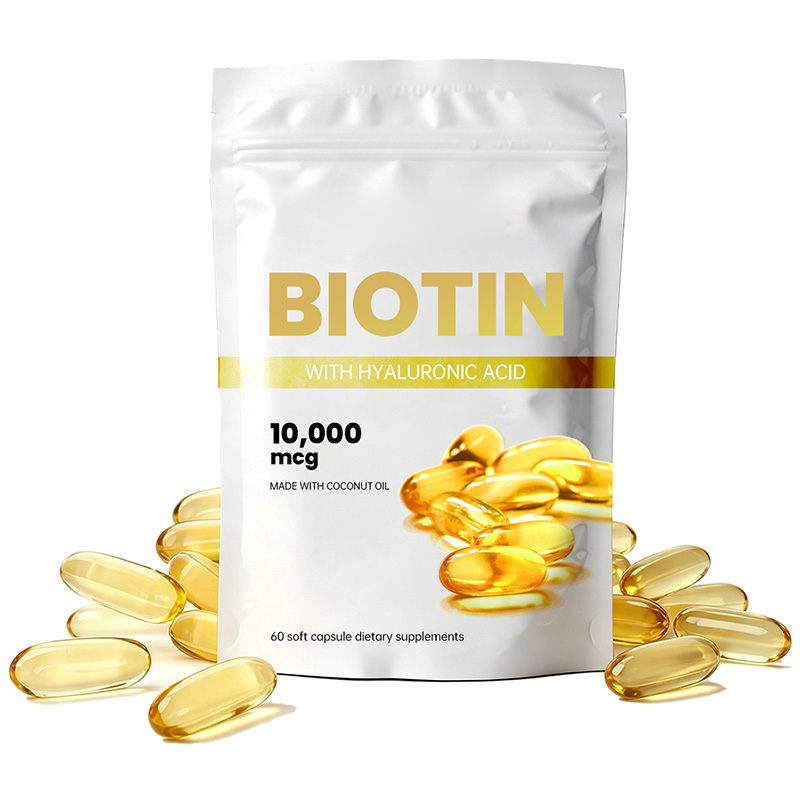
1. Shell standards: gelatin and vegetarian shells are regulated differently
Animal-derived gelatin shells are built on gelatin as the film former and follow the applicable national food safety standard for gelatin. The critical control items are gel strength, viscosity, clarity, heavy metals such as lead and arsenic, sulphur dioxide residue, microbial limits, and characteristic contaminants such as chromium. Every lot should arrive with a certificate of analysis, and the supplier's manufacturing licence should be verified.
Vegetarian shells, usually hypromellose (HPMC) and sometimes pullulan, serve vegetarian consumers and markets with particular religious dietary requirements. They sit under a different standards framework, typically referencing the relevant excipient or food additive monograph, with key items including degree of substitution, viscosity, water content, loss on drying and microbial limits. HPMC shells cost noticeably more, and they behave differently to humidity: gelatin shells become brittle in dry conditions while HPMC shells are more prone to deformation in humid ones, so storage and shipping conditions need to be set separately.
Colourants deserve their own check. Titanium dioxide has long been used for opacity and whiteness, but it is no longer permitted in food in several markets including the European Union. Export programmes must confirm the current position in the destination market before committing, because the cost of getting this wrong is the whole batch.
2. The fill: the ingredient list is the first gate
Fill compliance is really ingredient list compliance. Every component has to qualify as an ordinary food ingredient, an approved novel food, an item on the medicinal-and-food homology list, or a substance within the supplement ingredient catalogue - and it needs a defined specification and test method. Four problems recur: using an ingredient that is only permitted in supplements while filing the product as ordinary food; exceeding the use level or population scope stated in the novel food announcement; using a botanical that is not on the homology list; and a mismatch between the stated specification and the actual test method.
Excipients are in scope too. Microcrystalline cellulose, magnesium stearate, silicon dioxide and maltodextrin all have to be food grade and declared honestly on the label.
3. Shell-fill compatibility: a technical issue that becomes a compliance one
Compatibility looks like a formulation matter but it turns into a compliance failure. Formulations containing aldehydes or strong reducing sugars cross-link with gelatin, so the shell hardens in storage and disintegration time extends significantly. A product that passed at release can fail disintegration when sampled late in its shelf life. The remedies are to switch shell type, reformulate to reduce reducing sugars and avoid aldehydic flavours, or add disintegration checkpoints to the stability protocol.
High-oil fills raise a different risk: migration through the shell and softening. Liquid and semi-solid fills normally go to softgel processing; hard capsules filled with liquid demand band sealing or a self-locking design and tighter storage control.

4. The label: mandatory items and the red lines
A capsule label needs at least: product name reflecting true nature, ingredient list in descending order of inclusion including shell components, net content and serving size, production date and shelf life, storage conditions, manufacturer name, address and contact, product standard code, production licence number, allergen declaration where relevant, and unsuitable-population or intake-limit statements where the ingredient regime requires them.
Claims are where trouble starts. Ordinary food cannot carry health function claims, and nothing may imply disease prevention or treatment. Phrases such as "supports immune function" or "helps maintain healthy blood lipids" are reserved for products that hold a supplement registration or filing, and even then only in the approved wording. Absolute or suggestive phrasing carries risk of its own.
5. Filing and testing: where applications stall
On a supplement filing route, expect to prepare the formulation and process description, the product technical specification, test reports and the manufacturer's qualification documents. Three things routinely stall an application: ingredient levels that do not match the filing catalogue, technical specifications that set unmeasurable indicators or omit critical ones, and test reports whose parameters do not line up with the declared specification.
On an ordinary food route, ensure the standard being applied - national, industry or enterprise - covers every critical parameter, and declare it correctly on the label. An enterprise standard has to be published on the regulator's platform before it can be used.
6. Move the compliance review to the sampling stage
The most efficient sequence is a full compliance pre-check before any bench work: verify the regulatory status and use limits of every ingredient, confirm the shell standard and the acceptability of colourants in the destination market, draft the label and have it reviewed by someone who works with these regulations daily - and only then start formulation.
Add compliance-relevant endpoints to the stability protocol as well: disintegration time, fill migration and shell brittleness, not just assay and microbiology. These determine whether the product is still compliant at the end of its shelf life.
For brand owners, compliance in capsule OEM is not the last formality before launch. It is a constraint that belongs in the formulation stage, and putting it there is what actually saves time.
Related Products
Vitamin D3 K2 with Magnesium & Zinc Softgels | VITAMIN D3+K2 MAGNESIUM+ZINC Softgels OEM | Calcium + Magnesium + Zinc + Vitamin D3 Softgels | CALCIUM+MAGNESIUM+ZINC D3 Softgel OEM
About Guangzhou Mesen Health Biotechnology Co., Ltd
Guangzhou Mesen Health Biotechnology Co., Ltd is located in the Huashan Science and Technology Park, Huadu District, Guangzhou. The company has focused on OEM and ODM services for the big health industry for nearly 20 years, operating dedicated research, production, sales and management centres, and maintaining long-term strategic partnerships with well-known Chinese medicine colleges and research institutions. Capabilities span pressed candy, gummies, capsules, solid beverages, herbal teas, plant beverages, protein powders, dietary supplements and enzyme jelly - from formulation development through contract manufacturing. For details on minimum order quantities, sampling lead times and quotations, see our manufacturing advantages and product range, or contact us for a tailored proposal.
Further Reading